Introduction
A tow truck is not always called for the same reason. A vehicle that simply will not start is a very different situation from a car that has been damaged in a collision, is blocking traffic, or has ended up away from the roadway. Although both situations may involve towing, the equipment, handling, safety considerations, and recovery process can be quite different.
Understanding the difference between accident recovery and standard towing can help Ohio drivers make better decisions during an already stressful situation. It can also help you explain your circumstances clearly when requesting professional assistance.
Standard towing generally involves transporting a vehicle from one location to another because it has broken down, will not start, or needs to be moved. Accident recovery is more specialized. It may involve a damaged, disabled, overturned, or otherwise difficult-to-move vehicle that requires careful handling after a collision.
For drivers in the Columbus and Central Ohio area, services such as emergency towing, flatbed towing, vehicle recovery, roadside assistance, and accident recovery can address different types of roadside problems. Casper Towing Ohio's website lists these services as part of its towing and roadside assistance offerings.
Knowing which type of assistance you need can make the dispatch process easier and help ensure the right equipment is sent.
What Is Standard Towing?
Standard towing is the transportation of a vehicle that cannot or should not be driven to its destination.
A vehicle might need a tow because of mechanical failure, a dead battery that cannot be resolved with a jump-start service, overheating, transmission problems, or another issue that leaves the vehicle unsafe or impossible to drive. Towing may also be requested when a vehicle needs transportation to a repair facility, home, storage location, or another approved destination.
The key point is that standard towing is primarily about transporting a vehicle safely.
Common Reasons Drivers Request Standard Towing
Typical situations include:
A vehicle will not start.
The engine has experienced a serious mechanical problem.
The transmission is no longer functioning properly.
The vehicle has overheated and cannot safely continue.
A driver has a breakdown far from home.
A vehicle needs transportation to a repair shop.
A vehicle needs to be moved because it cannot be driven safely.
Emergency towing is often part of this category. A vehicle does not necessarily need to be involved in an accident to require immediate towing.
For example, imagine a driver traveling through Columbus whose vehicle suddenly loses power and stops on the shoulder. There is no collision and the vehicle has no visible body damage. If roadside assistance cannot resolve the problem, a tow truck can transport the vehicle to a repair facility.
That is a standard towing situation.
Standard Towing Does Not Always Mean the Same Equipment
The type of vehicle and its condition can affect how it should be transported.
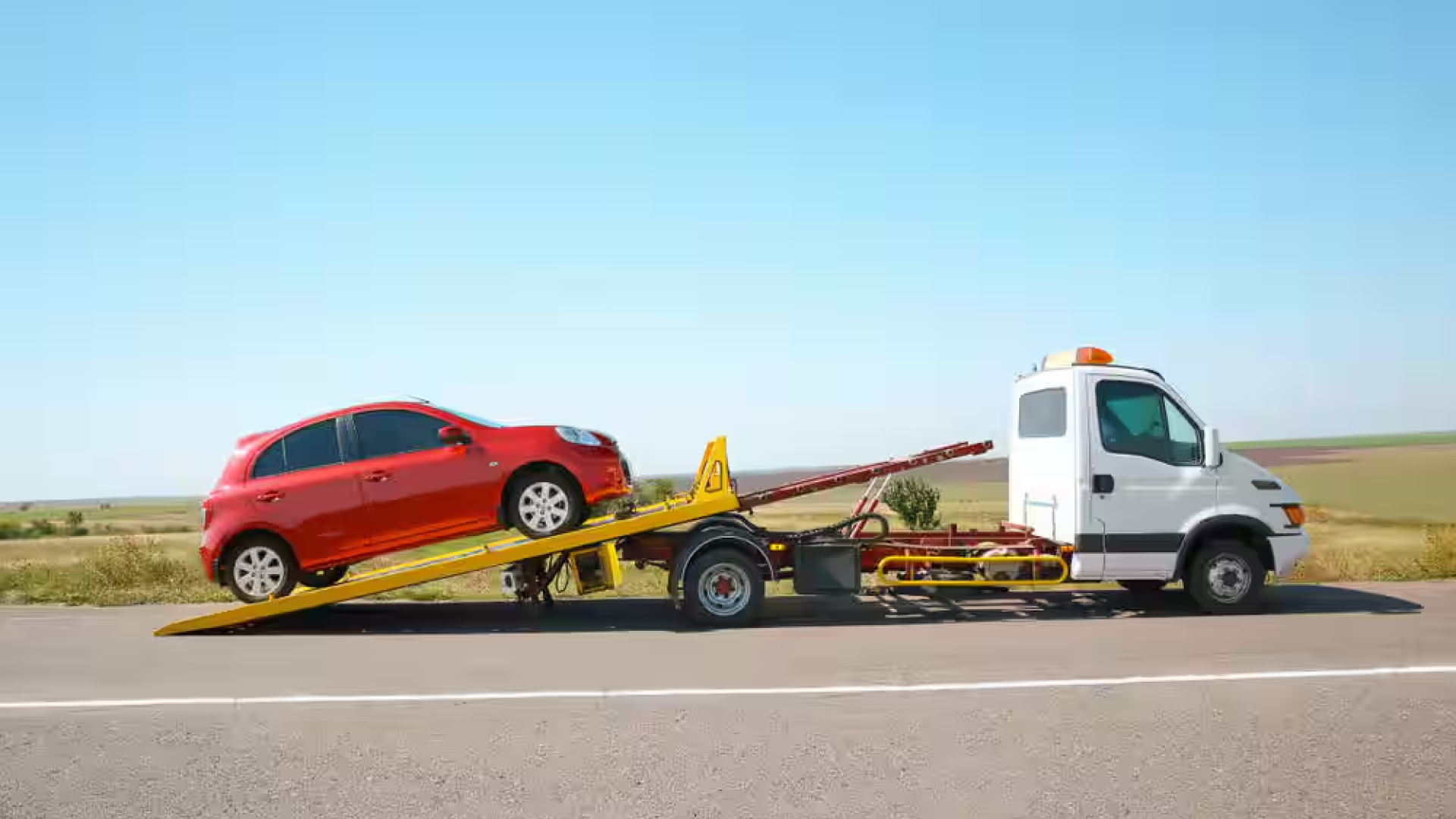
Flatbed towing is one option for vehicles that benefit from having all four wheels lifted completely off the road. It can be particularly useful for certain low-clearance, all-wheel-drive, luxury, or damaged vehicles.
The towing provider should consider the vehicle's condition before deciding how to load and secure it to ensure damage-free towing.
What Is Accident Recovery?
Accident recovery is the process of safely removing and transporting a vehicle that has been involved in a collision.
After an accident, a vehicle may have damaged wheels, suspension components, steering systems, body panels, bumpers, glass, or other parts. It may still start, but that does not automatically mean it is safe to drive.
Accident recovery focuses on safe removal and transportation after a collision, rather than simply moving a functioning vehicle from point A to point B. Casper Towing Ohio describes accident recovery as the safe removal and transportation of vehicles damaged or disabled following a collision.
Situations That May Require Accident Recovery
Accident recovery may be appropriate when:
A vehicle has sustained significant collision damage.
The vehicle cannot be driven safely.
A wheel or tire has been damaged.
Steering or suspension components may be compromised.
The vehicle is blocking part of the roadway.
The vehicle needs transportation to a repair facility.
Multiple vehicles are involved in a collision.
A vehicle has left the roadway following an accident.
The recovery process can be more complicated than an ordinary breakdown tow because the driver and towing operator have to account for the vehicle's damage and the circumstances surrounding the collision.
Why Accident Damage Changes the Towing Process
A damaged vehicle cannot always be loaded in the same manner as an undamaged vehicle.
For example, a vehicle with a damaged front wheel may not roll normally. A car with severe bumper damage could have loose components that need to be considered during loading. A vehicle with suspension damage may require additional care to prevent further problems during transport.
This is why it helps to tell the towing provider that the vehicle was involved in an accident rather than simply saying, "I need a tow."
That information gives the dispatcher a better understanding of the situation and helps determine what type of equipment may be appropriate.
Accident Recovery vs. Standard Towing: The Main Differences
Although the two services overlap, they serve different situations across several key factors:
Main Purpose: Standard towing focuses on transporting a disabled vehicle, whereas accident recovery focuses on safely removing and transporting an accident-damaged vehicle.
Common Cause: Standard towing is typically triggered by breakdowns or mechanical problems, while accident recovery is needed following a collision.
Vehicle Condition: Standard towing usually handles vehicles that are intact but mechanically disabled, whereas accident recovery deals with vehicles that may have sustained significant structural or body damage.
Loading Considerations: Standard towing decisions rely mostly on vehicle type and overall condition, while accident recovery loading depends heavily on damage, drivability, and vehicle positioning.
Safety Concerns: Standard towing primarily addresses roadside exposure and vehicle stability, whereas accident recovery must account for active traffic, collision scene safety, physical damage, and compromised vehicle stability.
Destination: Standard towing takes vehicles to a repair shop, home, storage, or other requested destination, while accident recovery most often delivers vehicles directly to a specialized repair facility, holding yard, or designated storage site.
Equipment Needs: Standard towing uses traditional wheel-lift or flatbed trucks, whereas accident recovery may require specialized winches, heavy-duty recovery equipment, or custom rigging.
The distinction is useful, but there is some overlap. A vehicle involved in a minor accident may simply require a standard tow, while a vehicle that has been badly damaged or moved from an unusual position may require more involved recovery work.
The right service depends on what happened, where the vehicle is located, and whether it can be safely moved.
When Should You Request Accident Recovery?
If your vehicle has been involved in a collision and you are uncertain whether it is safe to drive, professional assessment and transportation may be the safer option.
Do not assume that a vehicle is roadworthy simply because the engine starts.
Signs Your Vehicle May Need Recovery Instead of Driving
Pay attention to obvious warning signs such as:
Significant body damage
A wheel that appears bent or displaced
Fluid leaking from the vehicle
Steering problems
Suspension damage
A damaged tire or axle
Broken lights or mirrors
A hood, trunk, or door that cannot close properly
Warning lights appearing after the collision
A vehicle that pulls sharply to one side
If the vehicle is in an unsafe position or has sustained serious damage, trying to drive it away from the scene could create additional risk.
If there are injuries, immediate danger, fire, leaking fuel, or another emergency, contact the appropriate emergency services first.
When Is Standard Towing the Better Choice?
Standard towing is generally appropriate when there has not been an accident and the primary problem is that the vehicle cannot safely continue.
Consider a few common examples.
Mechanical Breakdown
Your vehicle suddenly develops an engine or transmission problem and cannot continue. There is no collision, but the vehicle needs transportation to a mechanic. Standard towing is appropriate.
Dead Battery
Your vehicle will not start because the battery is discharged. The first option may be a jump start service. If the vehicle still cannot be operated after roadside assistance, towing may be necessary. Look out for signs your car battery may fail to avoid getting stranded.
Flat Tire
A flat tire does not automatically mean you need a tow. If the tire can be safely changed and the vehicle is otherwise operational, a professional tire change service can get you moving again. Know what drivers should do before help arrives during flat tire emergencies, and keep in mind why professional tire change services are safer than DIY repairs. If the tire, wheel, or another component is severely damaged, transportation may be necessary.
Vehicle Overheating
An overheated vehicle may need to remain stationary until the cause is addressed. Continuing to drive can potentially worsen an existing mechanical problem. If the vehicle cannot safely continue, emergency towing may be appropriate.
Casper Towing Ohio offers comprehensive roadside assistance including jump starts, tire changes, fuel delivery, car lockout assistance, emergency towing, and other solutions for common roadside emergencies.
What About Vehicle Recovery?
Vehicle recovery is related to both towing and accident recovery, but it describes another type of situation.
Recovery generally becomes relevant when a vehicle is stuck, off the roadway, or otherwise unable to return to a normal driving position without assistance. Understanding the difference between vehicle recovery and towing helps ensure you call for the right equipment.
For example, a vehicle could become stuck in mud, sand, snow, or another difficult location. A vehicle might also leave the roadway after an accident or slide into a position where ordinary towing is not enough. Learn how vehicle recovery services help in difficult situations when standard methods aren't sufficient.
Casper Towing Ohio describes vehicle recovery as assistance for vehicles that are stuck or unable to return safely to normal driving conditions.
Recovery Is About More Than Pulling a Vehicle
Trying to recover a stuck vehicle yourself can create additional problems.
Using the wrong attachment point, applying force in the wrong direction, or using unsuitable equipment can damage suspension components, bumpers, axles, or other parts. This is why vehicle recovery requires specialized training and equipment and how professional recovery equipment protects vehicles during operations.
If your vehicle is stuck, tell the towing company exactly where and how it is positioned. A vehicle buried in mud is different from a vehicle sitting on a roadside shoulder, and accurate information can help the provider determine what assistance may be necessary.
How the Accident Recovery Process Typically Works
Every accident is different, but understanding what happens during accident vehicle recovery makes the general process straightforward.
Step 1: Get to a Safe Position
If possible, move yourself away from moving traffic and practice essential safety tips for breakdowns on busy roads. Learn how to safely handle an accident before your vehicle is recovered. Turn on your hazard lights when appropriate and avoid standing unnecessarily in an active traffic lane. If there are injuries or an immediate safety threat, contact emergency services.
Step 2: Determine Whether the Vehicle Is Drivable
Do not assume the vehicle is safe simply because it starts. Look for visible damage and consider whether the steering, wheels, tires, brakes, suspension, or other critical components may have been affected. When in doubt, request professional assistance rather than taking an unnecessary risk.
Step 3: Give the Towing Provider Accurate Information
When requesting assistance, know what information you should provide when calling a tow truck:
Your exact location
The vehicle's make, model, and approximate size
A description of the accident
Whether the vehicle can move
Whether it is blocking traffic
Any visible damage
Whether the vehicle is on the roadway, shoulder, or off-road
Your preferred destination, if known
Accurate information helps the dispatcher determine the appropriate service. Casper Towing Ohio also recommends providing precise location information and explaining what happened when requesting towing assistance.
Step 4: Allow the Vehicle to Be Handled Properly
Once the tow operator arrives, explain any damage you have noticed. See how towing professionals handle accident scene vehicle removal. The operator can assess the vehicle's position and determine the appropriate way to load, secure, and transport it based on the circumstances.
What Should You Do Immediately After an Accident?
The towing decision is only one part of accident response. Your first priority should always be personal safety, especially knowing why fast response times matter after a vehicle accident.
If you are involved in a collision:
Check yourself and others for injuries.
Contact emergency services when necessary.
Move to a safe location if it is possible to do so safely.
Turn on hazard lights.
Avoid standing in active traffic.
Follow instructions from law enforcement or emergency personnel.
Document the scene when it is safe and appropriate.
Contact your insurance provider according to your policy requirements.
Arrange vehicle transportation if the vehicle should not be driven.
Avoid arguing about fault at the scene or attempting repairs in an unsafe location. The towing company handles the vehicle's transportation; emergency responders and law enforcement handle matters that fall within their responsibilities.
Common Misconceptions About Accident Towing
"If the car starts, I can drive it."
Not necessarily. A collision can affect steering, suspension, wheels, brakes, or other safety-related components without completely disabling the engine.
"Accident recovery and towing are exactly the same."
They overlap, but accident recovery typically involves additional considerations because the vehicle has been involved in a collision.
"A flatbed is only for expensive cars."
Flatbed towing vs. traditional towing demonstrates that flatbeds are useful for many vehicle types. Discover how professional flatbed towing protects your vehicle during transport and when flatbed towing is the best choice.
"I should tell the tow company only that I need a tow."
A better approach is to explain what happened. Mentioning an accident, damaged wheel, vehicle stuck off the roadway, or other unusual circumstance can help the dispatcher understand the situation before sending assistance.
How to Choose the Right Towing Service After a Collision
When selecting a towing provider, focus on practical questions rather than choosing solely based on the lowest advertised price. Having a trusted towing company saved in your phone ahead of time saves critical minutes during an emergency.
Ask whether the company:
Provides accident recovery
Offers flatbed towing
Handles vehicle recovery
Provides 24/7 emergency towing assistance
Can transport the vehicle to your desired destination
Gives pricing information before service
Has equipment appropriate for your vehicle
Clearly explains the towing process
Casper Towing Ohio's published services include accident recovery, vehicle recovery, emergency towing, flatbed towing, and roadside assistance. Its website also states that it provides 24/7 emergency dispatch and upfront pricing information. Learn more about their capabilities or contact us directly for assistance.
Before authorizing service, clarify the destination and expected charges so there are fewer surprises. Understanding how much towing costs in Columbus, OH can help you set realistic expectations.
Practical Takeaways for Ohio Drivers
You do not need to memorize every type of towing service. Remember these basic distinctions:
Standard towing: Your vehicle is disabled and needs transportation.
Accident recovery: Your vehicle has been damaged in a collision and needs safe removal or transport.
Vehicle recovery: Your vehicle is stuck, off the roadway, or difficult to retrieve.
Roadside assistance: The problem may be solved without transporting the vehicle, using services like emergency fuel delivery when running out of gas.
Flatbed towing: A towing method that carries the vehicle on a platform rather than leaving its wheels rolling on the road.
Understanding how roadside assistance helps drivers get back on the road faster and the role of professional towing services during unexpected emergencies ensures peace of mind. Remember that weather conditions increase the need for roadside assistance, making preparation key. Knowing how to reduce the risk of needing emergency roadside assistance helps keep you safe year-round.
The most useful thing you can do when calling for help is describe the situation accurately. If you are unsure which service you need, explain what happened rather than trying to select the technical service name yourself. A towing dispatcher can use that information to determine what type of assistance may be appropriate.
Frequently Asked Questions
1. What is the difference between accident recovery and standard towing?
Standard towing generally transports a disabled vehicle that needs to be moved because of a breakdown or mechanical problem. Accident recovery focuses on safely removing and transporting a vehicle that has been damaged or disabled following a collision.
2. Do I need accident recovery if my car still starts after a crash?
Not necessarily, but a running engine does not prove that the vehicle is safe to drive. If the collision caused damage to the wheels, tires, steering, suspension, brakes, or other important components, professional transportation may be the safer choice.
3. Can a tow truck transport a vehicle damaged in an accident?
Yes. Accident recovery services are designed to remove and transport accident-damaged vehicles. The appropriate equipment and loading method depend on the vehicle's condition, location, and extent of damage.
4. What should I do if my vehicle breaks down on the side of the road?
Turn on your hazard lights, move to a safer position if possible, and avoid standing in active traffic. Learn what to do while waiting for emergency towing service. If the vehicle cannot be safely driven, contact roadside assistance or emergency towing and provide your exact location and a description of the problem.
5. Is flatbed towing better after an accident?
A flatbed can be a suitable option for many damaged vehicles because the vehicle is carried on the platform rather than being towed with its wheels on the road. The best method depends on the vehicle's damage, drivetrain, clearance, and overall condition.
6. What information should I give a towing company after an accident?
Provide your exact location, vehicle make and model, a description of the collision, whether the vehicle can move, visible damage, and whether it is on the roadway, shoulder, or off the road. This information can help the dispatcher determine the appropriate assistance.
7. Can roadside assistance help without towing my vehicle?
Yes. Some roadside problems can be addressed without transportation. Common examples include jump starts, tire changes, fuel delivery, and certain lockout situations. If the problem cannot be resolved safely at the roadside, towing may then be necessary.
8. How much does towing or accident recovery cost in Ohio?
There is no single price for every tow. Cost can depend on factors such as location, vehicle type, distance, equipment required, and the nature of the recovery. Ask for pricing information before authorizing service whenever possible.
9. What should I do if my vehicle leaves the roadway after an accident?
Prioritize personal safety and avoid attempting a risky recovery yourself. Contact appropriate emergency services if necessary, then explain the vehicle's exact location and condition to a professional recovery provider so suitable equipment can be considered.
10. How can I request emergency towing or accident recovery?
Contact a professional towing provider and provide your exact location, vehicle details, and a clear description of what happened. Discover why 24/7 towing services are essential for modern drivers. If the situation involves a collision, specifically mention the accident and any visible damage so the provider can determine what type of assistance may be appropriate.
Conclusion
Accident recovery and standard towing may both involve a tow truck, but they solve different problems. Standard towing is generally focused on transporting a disabled vehicle, while accident recovery involves the additional challenges created by collision damage, vehicle position, and roadside safety.
The distinction becomes especially useful when you are standing beside a damaged or disabled vehicle and trying to decide what to do next. Describing the situation accurately is more important than knowing the perfect towing terminology.
If your vehicle has been involved in an accident, do not assume that it is safe to drive simply because it starts. If your vehicle has broken down without a collision, roadside assistance may solve the problem, but emergency towing may be necessary if the vehicle cannot safely continue.
For Ohio drivers, understanding the difference between towing, accident recovery, vehicle recovery, flatbed towing, and roadside assistance can make an unexpected vehicle problem easier to handle. A calm response, accurate information, and appropriate professional assistance can help get the vehicle moved safely and put you one step closer to resolving the situation.