Introduction
All-wheel-drive vehicles are built to distribute engine power across multiple wheels, giving drivers better traction in rain, snow, and other challenging conditions. That same drivetrain design, however, can make towing more complicated when an AWD vehicle needs to be transported after a breakdown, collision, mechanical failure, or roadside emergency.
A conventional tow method that leaves some wheels rolling on the pavement may not always be appropriate for an AWD vehicle. Depending on the vehicle's drivetrain, transmission, manufacturer requirements, and the towing method used, unwanted wheel movement can potentially cause mechanical problems.
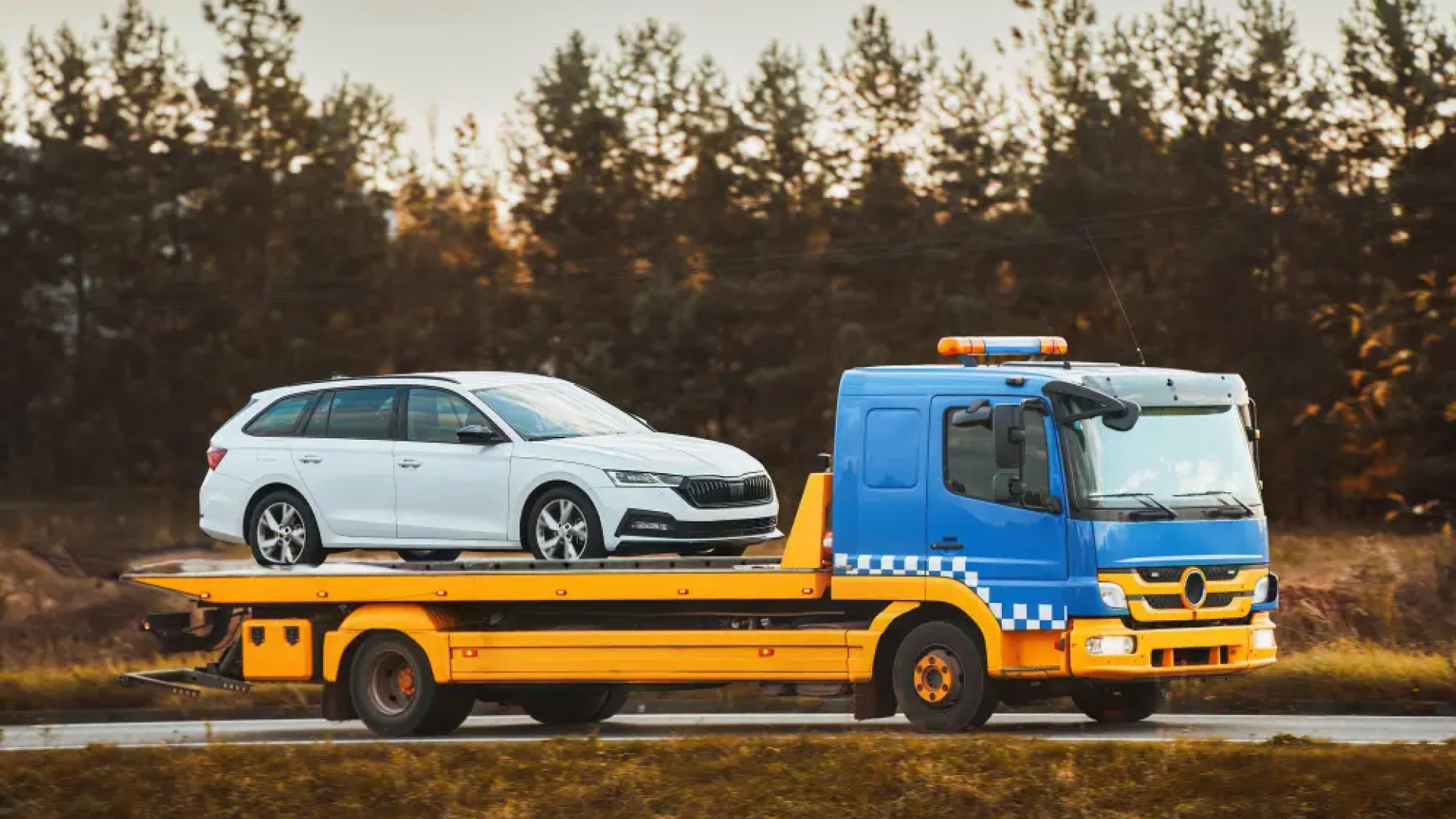
Flatbed towing offers a straightforward alternative: the entire vehicle is lifted onto the carrier so that all four wheels remain off the road during transport. This reduces rolling-related drivetrain concerns and provides a stable way to move many AWD cars, SUVs, and crossovers.
For Ohio drivers, this can be especially useful after an accident, during winter breakdowns, or when a vehicle needs transportation to a repair facility. Understanding how flatbed towing works and why it is often recommended for AWD vehicles can help you make a safer decision when your vehicle cannot be driven.
Why AWD Vehicles Require Special Towing Consideration
AWD systems are more complex than a basic two-wheel-drive setup because power can be transferred between the front and rear axles. Depending on the vehicle, the system may use differentials, transfer cases, electronically controlled couplings, or other components to manage torque distribution.
That means the drivetrain can respond differently when a vehicle is being towed with only some wheels turning.
What Happens When AWD Wheels Roll During Towing?
When a vehicle is driven normally, its drivetrain components operate according to the conditions expected by the manufacturer. Towing can create a different situation.
If two wheels remain on the ground while the other two are lifted, the wheels that remain on the pavement can continue rotating. Depending on the vehicle's design, that rotation can transfer movement through drivetrain components even though the engine is not powering the vehicle.
The exact risk varies by make, model, drivetrain configuration, transmission, and towing procedure. Some vehicles have specific towing requirements, while others may allow certain methods for limited distances or speeds.
That is why guessing is not a good idea.
Before towing an AWD vehicle, the vehicle owner's manual should be checked for manufacturer-specific towing instructions. A qualified towing professional can also determine which equipment and method are appropriate for the vehicle.
AWD Does Not Automatically Mean the Vehicle Can Be Towed Any Way
A common misconception is that AWD simply means "all four wheels are powered," so any towing method should work as long as the vehicle is moved slowly.
That is not necessarily true.
AWD systems differ considerably between manufacturers and vehicle models. Some have permanent all-wheel drive, while others activate AWD electronically only when additional traction is needed. There are also differences in transmission design and drivetrain components.
The safest towing decision depends on the specific vehicle rather than the AWD label alone.
What Is Flatbed Towing?
Flatbed towing uses a tow truck equipped with a long, level platform called a flatbed or carrier. Instead of pulling the vehicle behind the truck with some wheels rotating on the roadway, the vehicle is loaded completely onto the platform.
Once secured, all four tires are lifted off the ground.
This makes flatbed transport particularly useful for vehicles where wheel movement during towing could create a concern.
How a Flatbed Tow Works
A typical flatbed towing process follows several basic steps:
The vehicle is assessed. The tow operator considers the vehicle's size, condition, drivetrain, location, and ability to roll or steer.
The carrier is positioned. The flatbed is aligned with the vehicle so loading can be performed safely.
The vehicle is loaded. A winch, ramps, or other appropriate equipment may be used if the vehicle cannot be driven onto the platform.
The vehicle is positioned correctly. The operator centers the vehicle on the carrier and checks clearance.
The vehicle is secured. Proper tie-down equipment is used to prevent movement during transportation.
The vehicle is transported. Because the vehicle is fully supported by the carrier, its wheels remain off the road.
The procedure can vary depending on whether the vehicle is operational, damaged, locked, stuck, or involved in an accident.
Why Flatbed Towing Is Often a Good Choice for AWD Vehicles
The primary advantage of flatbed towing for an AWD vehicle is simple: all four wheels are lifted off the roadway.
That eliminates the need for the vehicle's wheels to roll during transport and can help avoid drivetrain-related towing concerns associated with certain wheel-lift or partial-lift methods.
It Keeps the AWD System From Turning During Transport
An AWD drivetrain can contain multiple components that work together to transfer torque between axles. With a flatbed, the tires are not rotating against the pavement while the vehicle is transported.
This gives the drivetrain a much more predictable condition during towing.
It does not mean every AWD vehicle requires a flatbed in every situation. Manufacturer instructions still matter. However, full vehicle loading is often a practical approach when the goal is to minimize unnecessary drivetrain movement.
It Protects the Tires From Additional Road Contact
A vehicle that has already experienced a mechanical problem or accident does not need additional miles added to its tires during transport.
Flatbed towing keeps the tires completely off the roadway. This can be useful when a tire is damaged, the vehicle has uneven tire wear, or a collision has affected the wheels or suspension.
It Can Reduce Stress on Damaged Components
After a collision, components such as wheels, suspension parts, steering systems, bumpers, or underbody components may not be in normal operating condition.
Driving the vehicle—or towing it with wheels rolling on the ground—may create additional movement that is undesirable for a damaged vehicle.
A flatbed allows the vehicle to be transported without requiring its tires to roll along the road.
It Provides Stable Vehicle Transport
Once the vehicle is properly positioned and secured on the carrier, the entire vehicle moves together with the tow truck.
This can be particularly helpful for transporting AWD SUVs, crossovers, performance vehicles, and other vehicles that need careful handling.
Situations Where Flatbed Towing Makes Sense
AWD vehicles can require towing for many reasons. A flatbed carrier can be particularly useful in situations where the vehicle should not be driven or partially towed.
After an Accident
A collision can affect more than the visible body panels. Wheels, suspension components, steering parts, axles, and drivetrain components may also be damaged.
If an AWD vehicle has been involved in an accident, transporting it completely off the ground can be a sensible option, especially when there is uncertainty about mechanical damage. Professional accident recovery relies heavily on understanding what happens during a professional accident recovery service to ensure accident scene vehicle removal is executed safely.
The vehicle should not be driven simply because it starts. A proper assessment should come first.
After a Major Breakdown
An AWD vehicle with a failed transmission, damaged drivetrain, serious engine problem, or other major mechanical issue may need transportation to a repair shop.
Flatbed towing allows the vehicle to be moved without relying on its own drivetrain to function. When dealing with unexpected issues, understanding what causes unexpected vehicle breakdowns can help you react appropriately.
During Winter Breakdowns
Ohio drivers deal with snow, ice, freezing temperatures, and slippery roads during winter. An AWD system can help provide traction while driving, but it does not make a disabled vehicle immune to mechanical failure.
If an AWD vehicle becomes disabled on a snowy shoulder or icy road, a flatbed can provide a controlled way to move it without requiring the drivetrain or tires to propel the vehicle.
When a Vehicle Has a Flat or Damaged Tire
A severely damaged tire can make conventional towing more complicated. If the vehicle cannot safely roll, loading it onto a flatbed may be preferable.
This can also apply when more than one tire is damaged or when wheel and suspension damage makes normal movement unsafe. If you experience flat tire emergencies, requesting a tire change or flatbed transport is far safer than attempting risky DIY repairs, which is why professional tire change services are recommended.
For Long-Distance Transport
If an AWD vehicle needs to travel a substantial distance to another city, dealership, repair facility, or destination, keeping all four wheels off the road can make flatbed towing a practical transportation method.
The vehicle remains stationary relative to the carrier while the carrier handles the movement.
How to Prepare an AWD Vehicle for Flatbed Towing
If your AWD vehicle needs a tow, a few simple steps can make the process safer and easier.
Tell the Towing Company the Vehicle Is AWD
Do not simply request "a tow truck." Knowing what information to provide when calling a tow truck ensures the right equipment is dispatched.
Provide the vehicle's:
Make and model
Model year
AWD or 4WD configuration
Approximate condition
Location
Whether it starts and moves
Whether the steering works
Any visible accident or tire damage
This information helps the towing provider determine what equipment may be appropriate.
Remove Personal Items
Before transport, remove valuable, fragile, or loose belongings from the passenger compartment and cargo area whenever practical.
Objects left inside the vehicle can move during loading or transportation.
Explain Any Mechanical or Physical Damage
If the vehicle has a locked wheel, damaged axle, flat tire, steering problem, collision damage, or other issue, tell the operator before loading begins.
The loading procedure may need to be adjusted for a vehicle that cannot roll normally. Using professional recovery equipment helps prevent unnecessary wear during loading.
Check the Owner's Manual
If accessible, review the manufacturer's towing instructions. Some vehicles have specific requirements involving parking brakes, transmission settings, battery conditions, or other procedures.
The owner's manual is one of the best sources for model-specific towing information.
Common Mistakes to Avoid With AWD Towing
A few assumptions can turn a routine tow into an avoidable mechanical problem.
Assuming Slow Towing Is Always Safe
Reducing speed does not automatically make every towing method suitable for every AWD vehicle.
The issue is not simply speed. Wheel rotation, drivetrain configuration, towing distance, and manufacturer requirements all matter.
Using the Wrong Tow Equipment
A tow truck should be selected based on the vehicle and situation rather than convenience alone.
A professional towing provider can evaluate whether a flatbed, wheel-lift, or another approach is appropriate.
Ignoring Collision Damage
A vehicle that appears driveable may still have hidden damage following an accident. Continuing to drive it can create additional risks.
When there is uncertainty, professional assessment and appropriate vehicle transport are preferable to taking chances.
Forgetting That EVs and Hybrid AWD Vehicles Can Differ
Electric and hybrid AWD vehicles may have different drivetrain layouts and towing requirements from conventional gasoline-powered vehicles.
Owners should follow the manufacturer's towing instructions and tell the towing provider what type of vehicle they have.
What Drivers Should Do When an AWD Vehicle Breaks Down
Safety should come before figuring out the towing method. Reviewing safety tips for drivers experiencing a breakdown on busy roads is critical.
If your vehicle becomes disabled:
Move to a safe location if the vehicle can still be operated safely.
Turn on the hazard lights.
Stay aware of traffic, especially on highways or narrow shoulders.
Avoid standing directly in moving traffic.
Contact a 24/7 emergency towing or roadside assistance provider.
Tell the operator that the vehicle is AWD.
Explain whether the vehicle has accident, tire, steering, or drivetrain damage.
Follow the towing professional's instructions while waiting for emergency towing service.
If you are involved in a crash, follow local emergency and law-enforcement guidance as appropriate before arranging vehicle transportation.
Choosing the Right Towing Method for Your AWD Vehicle
There is no single towing method that applies to every AWD vehicle. The best approach considers the vehicle's design, condition, manufacturer's instructions, towing distance, and location.
For many AWD cars and SUVs, a flatbed provides a strong practical advantage because the entire vehicle is supported during transport. The tires do not need to roll against the pavement, and the drivetrain remains inactive throughout the journey. That is why understanding how professional flatbed towing protects your vehicle is vital for peace of mind.
For drivers in Ohio, this can be especially valuable when dealing with accident recovery, winter breakdowns, disabled vehicles, or transportation to a repair facility.
The most useful question is not simply, "Do I need a flatbed?" Instead, ask: "What towing method is appropriate for my specific vehicle and its current condition?"
That question puts vehicle safety ahead of convenience.
Conclusion
Flatbed towing can be an excellent transportation method for AWD vehicles because it keeps all four wheels off the road during the tow. This can minimize unwanted wheel rotation, reduce concerns associated with partial towing, and provide stable support for vehicles that are damaged, disabled, or being transported over longer distances.
Still, AWD vehicles are not all designed the same way. Manufacturer towing instructions should always be considered, and the vehicle's condition plays an equally important role. A damaged wheel, failed drivetrain, steering problem, or collision can change the safest way to load and transport the vehicle.
If your AWD vehicle needs assistance, provide the towing operator with as much information as possible before the truck arrives. Knowing the vehicle's drivetrain, condition, and location helps the towing professional select appropriate equipment and handle the vehicle properly. Having a trusted towing company saved in your phone makes getting help seamless.
For Ohio drivers, understanding the difference between flatbed and partial towing can make an unexpected breakdown or accident easier to manage—and can help protect the vehicle while it is being transported. Feel free to contact us or visit our homepage whenever you need reliable assistance.
Frequently Asked Questions
Is flatbed towing safer for AWD vehicles?
Flatbed towing is often a suitable choice for AWD vehicles because all four wheels are lifted off the ground. This prevents the tires from rotating on the road during transport and can reduce drivetrain-related concerns. The vehicle manufacturer's towing instructions should still be followed.
Can an AWD car be towed with a wheel-lift truck?
It depends on the vehicle. Some AWD vehicles have specific requirements that may make partial towing unsuitable, while others may permit certain procedures. Always check the owner's manual or have a towing professional determine the appropriate method for the specific make and model.
Why should all four wheels be off the ground when towing some AWD vehicles?
Keeping all four wheels off the ground prevents the vehicle's wheels from rolling during transport. This can help avoid unwanted movement through drivetrain components that may occur when only one axle is lifted.
Can flatbed towing transport a vehicle that does not start?
Yes. A flatbed can transport many non-running vehicles. Depending on the vehicle's condition, the tow operator may use a winch, specialized loading equipment, or other procedures to get the vehicle safely onto the carrier.
Is flatbed towing useful after an AWD vehicle accident?
It can be particularly useful after an accident because the vehicle may have damage affecting its wheels, suspension, steering, axles, or drivetrain. Keeping the entire vehicle on a carrier avoids requiring damaged wheels to roll during transport.
Can an AWD SUV be transported on a flatbed?
Yes. Flatbed carriers are commonly used to transport many types of passenger vehicles, including AWD cars, crossovers, and SUVs. The tow provider should confirm that the carrier is appropriate for the vehicle's size, weight, condition, and loading requirements.
What information should I give a towing company about my AWD vehicle?
Provide the make, model, year, drivetrain type, exact location, and information about whether the vehicle starts, rolls, steers, or has visible damage. Mention flat tires, collision damage, locked wheels, or drivetrain problems before the tow truck arrives.
Does an AWD vehicle always require flatbed towing?
No. AWD does not automatically mean that a flatbed is mandatory in every situation. Towing requirements vary by vehicle. The owner's manual and professional towing guidance should be used to determine whether flatbed or another approved method is appropriate.
Can flatbed towing help with long-distance vehicle transport?
Yes. Flatbed towing can be a practical option for transporting a disabled or non-drivable vehicle over longer distances because the vehicle remains completely supported by the carrier instead of accumulating road miles on its tires.
What should I do if my AWD vehicle breaks down on an Ohio road?
Move to a safe location if possible, activate your hazard lights, remain aware of traffic, and request professional roadside or towing assistance. Tell the towing provider that the vehicle is AWD and describe any mechanical, tire, steering, or accident damage so the appropriate equipment can be dispatched.