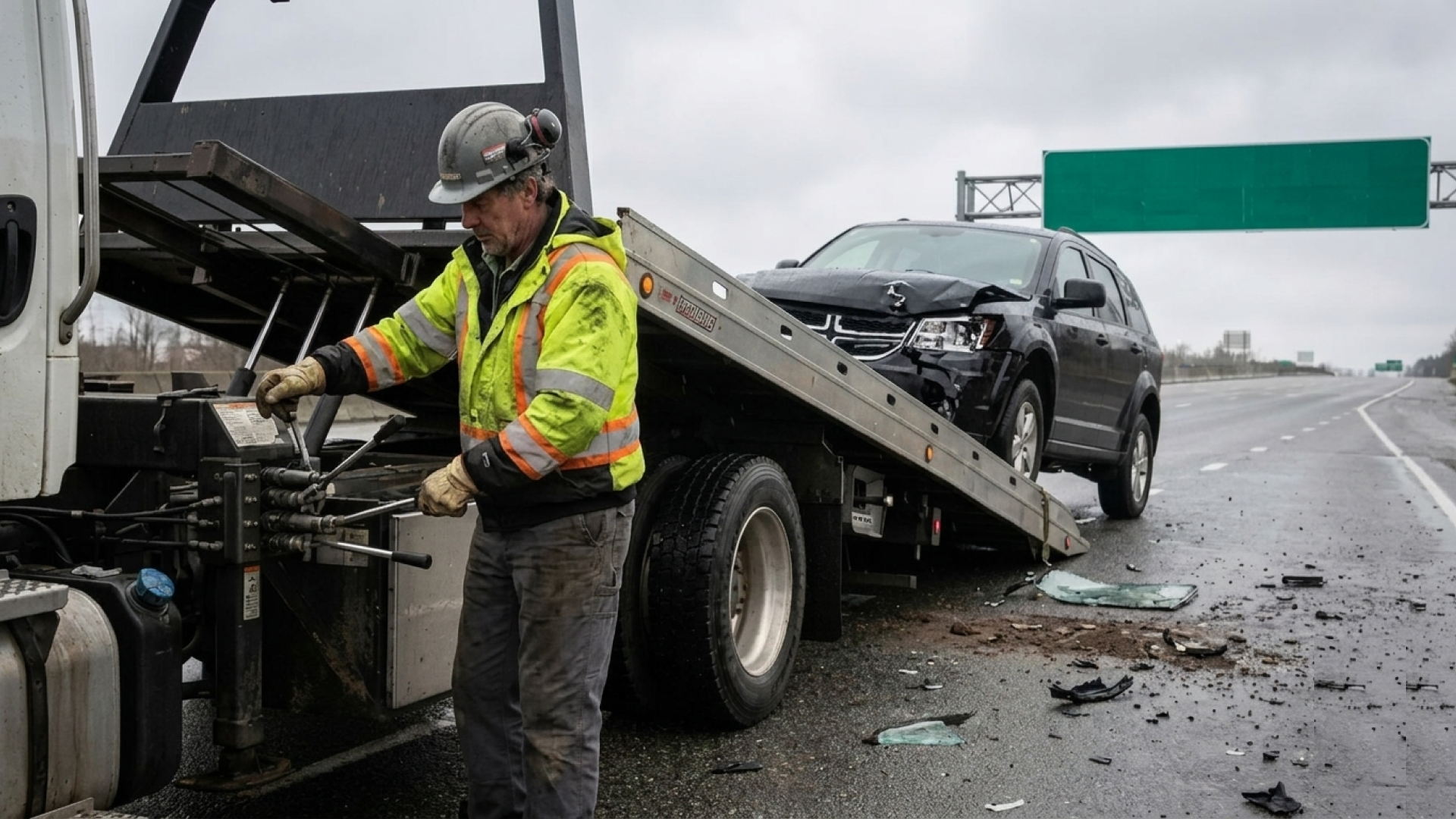
An accident can turn an ordinary drive into a confusing and stressful situation within seconds. Even after the vehicles stop moving, there are still important decisions to make: Is everyone safe? Should the vehicle be moved? Should you call the police? What information should you collect? Is the car safe to drive, or does it need to be towed?
The period between the collision and vehicle recovery matters. Poor decisions during those first few minutes can expose people to additional traffic hazards or cause further damage to an already damaged vehicle.
Knowing what to do before a tow truck arrives gives you a clearer plan when you need it most. The basic priorities are simple: protect people first, move to a safer location when possible, notify the appropriate authorities, document the scene, exchange information, and arrange professional accident recovery when the vehicle cannot safely continue.
For drivers in Ohio, understanding these steps can make the aftermath of a collision more manageable and help ensure the damaged vehicle is handled properly.
What to Do Immediately After a Car Accident
The first few minutes after a crash should focus on safety rather than determining fault or worrying about vehicle damage.
Check for Injuries First
Before inspecting your vehicle, check yourself and your passengers for injuries. If anyone appears seriously hurt, call 911 and request emergency medical assistance.
Avoid moving an injured person unless there is an immediate danger, such as fire or another collision risk. If you are able to do so safely, turn on your hazard lights to make the vehicle more visible to approaching drivers.
If the accident involves multiple vehicles, be aware that traffic may continue moving around the crash scene. A secondary collision can create additional injuries, so staying alert is essential.
Move Out of Immediate Traffic Danger
If the vehicle can still be moved safely and doing so does not create additional risk, move it to a safer location away from active traffic.
Do not attempt to drive a badly damaged vehicle simply to clear the road. A vehicle may appear drivable while having hidden problems involving the steering, suspension, brakes, wheels, airbags, or other safety systems.
If the car cannot be moved, remain in the safest available location while waiting for assistance. On a busy roadway, getting yourself out of an immediate traffic path is generally more important than standing next to the damaged vehicle.
Turn on Hazard Lights
Hazard lights can alert approaching drivers that something is wrong ahead.
If your vehicle is stopped in or near traffic, use its warning lights when possible. Depending on the circumstances, additional warning devices may also help increase visibility, but never place yourself in an unsafe position simply to set them up.
At night, during heavy rain, fog, snow, or other poor visibility conditions, extra caution is especially important, as weather conditions increase the need for roadside assistance.
Should You Call the Police After an Accident?
The appropriate response depends on the circumstances of the collision, but crashes involving injuries, significant property damage, suspected impaired driving, or other serious concerns may require law enforcement involvement.
When in doubt about an accident that appears serious, contacting emergency services is safer than trying to handle the situation entirely on your own.
Give the Dispatcher Clear Information
When speaking with emergency services or a towing provider, give specific information about your location.
Useful details include:
Street name and nearest intersection
Highway or interstate name
Exit number
Direction of travel
Nearby landmarks
Number of vehicles involved
Whether anyone is injured
Whether vehicles are blocking traffic
Whether a vehicle is leaking fluids or appears unsafe
Clear location information helps responders understand the situation before they arrive. It can also make it easier for an accident recovery provider to find you. Knowing what information you should provide when calling a tow truck ensures a faster, smoother dispatch.
Document the Accident Scene Carefully
Once immediate safety concerns have been addressed, document the accident if you can do so safely. Photos and notes can provide a useful record of what the vehicles and roadway looked like after the collision.
Take Photos From Multiple Angles
If conditions are safe, photograph:
Damage to every involved vehicle
Vehicle positions
License plates
Traffic signs and signals
Lane markings
Road conditions
Nearby property damage
Skid marks or debris
Visible fluid leaks
The surrounding roadway
Take wide photographs as well as close-ups. A close-up can show a damaged bumper, while a wider image may show where the vehicle was positioned relative to the roadway.
Do not put yourself in danger to get a particular photograph. If traffic is moving quickly or the scene is unstable, prioritize personal safety.
Exchange Driver and Insurance Information
Depending on the circumstances and applicable requirements, exchange relevant information with the other driver or drivers.
This may include:
Full name
Contact information
Driver's license information
Insurance information
Vehicle make and model
License plate number
Avoid arguing about who caused the accident. Stick to factual information and let the appropriate authorities and insurance professionals handle questions of responsibility.
Look for Witnesses
If people witnessed the collision, ask whether they are willing to provide their contact information.
Witness accounts may be useful later if there is disagreement about what happened. Write down information while the details are still fresh in your mind.
Know When Your Vehicle Should Not Be Driven
One of the most common mistakes after an accident is assuming that a vehicle is safe to drive simply because the engine starts. A collision can cause mechanical or structural problems that are not immediately obvious.
Warning Signs That a Vehicle May Need a Tow
Consider professional accident recovery if you notice:
A damaged or detached wheel
Steering problems
Brake problems
Severe fluid leaks
Significant bumper or body damage
Deployed airbags
Broken lights
A cracked windshield affecting visibility
Unusual noises
Smoke or burning smells
A vehicle that pulls sharply to one side
Damage underneath the vehicle
A door, hood, or trunk that cannot close properly
A vehicle involved in a collision may also have damage that is not visible from outside. If you are unsure whether the vehicle is safe to operate, having it transported for professional inspection is often a safer choice than taking it onto the road.
Do Not Attempt to Repair Serious Accident Damage at the Scene
An accident scene is rarely the right place for major repairs. Trying to straighten damaged components, reconnect electrical systems, remove body panels, or perform other makeshift repairs can create additional hazards.
A professional towing provider can assess the basic recovery situation and use appropriate equipment to move the vehicle.
For accident-damaged vehicles, flatbed towing can be particularly useful because the vehicle can be loaded completely onto the platform rather than being dragged with some wheels on the roadway. Flatbed towing is the best choice for vehicles requiring additional protection, including many accident-damaged, all-wheel-drive, low clearance vehicles, and specialty cars.
Why Proper Towing Equipment Matters
The right recovery method depends on the vehicle and the condition it is in.
A vehicle with severe wheel, suspension, drivetrain, or body damage may require equipment capable of loading and securing it without creating unnecessary additional damage. Understanding how professional recovery equipment protects vehicles helps explain why standard hooks are often insufficient.
This is one reason drivers should tell the towing provider that the vehicle has been involved in an accident rather than simply requesting a standard tow. Describe the damage as accurately as possible so the company can determine what equipment may be appropriate.
What Information Should You Give the Towing Company?
When requesting accident recovery, provide more than just your location.
Tell the dispatcher:
Where the vehicle is located.
Whether the vehicle is on a highway, street, shoulder, parking area, or other location.
Whether anyone is injured.
Whether police or emergency responders are already present.
Whether the vehicle can move under its own power.
Which parts of the vehicle appear damaged.
Whether airbags have deployed.
Whether the wheels or tires are damaged.
What type of vehicle is involved.
Where you want the vehicle transported, if known.
These details help the towing company understand the recovery requirements before dispatching a truck.
Casper Towing Ohio provides accident recovery and vehicle transportation services for damaged or disabled vehicles following collisions. Its accident recovery information specifically addresses situations involving collisions, non-drivable vehicles, roadside accidents, multi-vehicle incidents, and transportation to repair facilities or other approved destinations.
Where Should an Accident-Damaged Vehicle Be Towed?
The best destination depends on the circumstances.
1. Repair Shop
If you already have a preferred collision repair facility, you may be able to have the vehicle transported there. This can make the next stage of the process easier because the repair facility can inspect the vehicle and determine what repairs are required.
2. Storage Facility
Sometimes immediate delivery to a repair shop is not possible. A storage location may be used depending on the situation and arrangements made after the collision. Ask about the destination before the vehicle is loaded so you understand where it is going.
3. Another Approved Location
In some circumstances, the vehicle may need to be transported to another location selected by the owner, insurer, repair facility, or other authorized party. If you are uncertain about where the vehicle should go, ask questions before authorizing transportation.
What Should You Remove From Your Vehicle Before Towing?
If it is safe and permitted, remove personal belongings before the vehicle is transported.
Check areas such as:
Glove compartment
Center console
Door pockets
Trunk
Under-seat storage
Charging ports
Cup holders
Child-seat areas
Take important documents, electronics, medication, valuables, and other personal items with you when practical. Do not spend time searching through the vehicle if doing so would put you near moving traffic or an unsafe accident scene.
What Not to Do After an Accident
Knowing what to avoid can be just as useful as knowing what to do.
Do Not Leave the Scene Without Understanding Your Obligations: Accident-related responsibilities can vary depending on the circumstances. If emergency services or law enforcement are involved, follow their instructions.
Do Not Drive a Seriously Damaged Vehicle: A car that starts is not necessarily a car that is safe to drive. If the vehicle has major damage or you have concerns about steering, brakes, wheels, suspension, airbags, or other safety components, arrange professional transportation.
Do Not Stand in an Active Traffic Lane: Never remain beside a disabled vehicle in a location where passing traffic could strike you. Move to a safer area when possible and follow emergency personnel instructions.
Do Not Argue With Other Drivers: An accident is stressful enough without escalating the situation. Exchange information, document relevant facts, and allow the appropriate authorities and insurance professionals to determine what happens next.
Do Not Assume Hidden Damage Does Not Exist: Visible cosmetic damage may only tell part of the story. Mechanical, electrical, structural, or underbody damage can be difficult to identify without proper inspection.
Accident Recovery vs. Regular Towing
Although the terms are sometimes used interchangeably, accident recovery and ordinary towing can involve different circumstances.
SituationTypical NeedVehicle won't startEmergency towingFlat tireTire change or towingDead batteryJump start serviceEmpty fuel tankFuel deliveryVehicle stuck off the roadwayVehicle recoveryVehicle damaged in a collisionAccident recoverySeverely damaged vehicleFlatbed towing
Casper Towing Ohio lists emergency towing, flatbed towing, roadside assistance, jump starts, tire changes, fuel delivery, vehicle recovery, and accident recovery among its services.
The key difference is the condition and location of the vehicle. A routine tow may involve a vehicle that can be loaded relatively easily, while understanding the difference between vehicle recovery and towing highlights that accident scenes often require specialized extra care due to heavy collision damage or an awkward position.
How to Stay Safe While Waiting for a Tow Truck
Once recovery has been requested, the job is not completely finished. You still need to stay aware of your surroundings, following key rules for what to do while waiting for emergency towing service.
Stay in a Safe Location
If your vehicle is safely off the roadway and conditions allow, remain somewhere away from moving traffic. If you must stay in the vehicle, use your judgment based on the location and circumstances. A vehicle stopped in an active travel lane presents a different risk than one safely positioned in a protected area.
Keep Your Phone Available
Keep your phone charged and accessible so the towing provider can contact you. If your location changes, communicate the update. This is especially useful when a vehicle is moved by police or when traffic conditions force you to relocate.
Confirm the Tow Destination
Before the vehicle leaves, confirm the destination and make sure you have removed necessary belongings. If an insurance company or repair facility is coordinating the recovery, make sure everyone has the same destination information.
How Professional Accident Recovery Helps
Accident recovery is more than simply attaching a vehicle to a tow truck.
A damaged vehicle may have compromised wheels, suspension components, body panels, steering components, or other systems. Professional recovery equipment and proper loading techniques can help reduce the risk of causing additional damage during transportation.
Professional towing is also useful when a vehicle cannot safely return to the road under its own power. For drivers dealing with the aftermath of a collision, the goal is straightforward: protect people, secure the scene, and get the vehicle transported appropriately. Knowing what happens during a professional accident recovery service can give you peace of mind throughout the process.
A Simple Accident Recovery Checklist
If you are involved in a collision and your vehicle needs to be recovered, remember this sequence:
Check for injuries.
Call 911 when emergency assistance is needed.
Move to a safer location if it is safe to do so.
Turn on hazard lights.
Avoid driving a seriously damaged vehicle.
Exchange necessary information.
Photograph the scene when safe.
Contact your insurance provider as appropriate.
Request accident recovery or towing.
Confirm the vehicle's destination before transport.
Having this checklist saved on your phone can be useful because stressful situations make it harder to remember every step. The advantages of having a trusted towing company saved in your phone cannot be overstated when an unexpected crash occurs.
Common Misconceptions About Accident Towing
“If the engine starts, I can drive home.”
Not necessarily. A vehicle can have serious steering, brake, suspension, wheel, airbag, or structural damage even when the engine operates normally.
“A small accident doesn't require towing.”
Sometimes it doesn't. But even a seemingly minor collision can make a vehicle unsafe to drive. The vehicle's condition—not simply the appearance of the damage—should determine whether it needs professional transportation.
“I should move the damaged vehicle myself.”
Only if it can be done safely and without creating additional risk. If the vehicle is seriously damaged, professional accident recovery is usually the better option.
“Any tow truck can handle an accident vehicle.”
Different vehicles and damage conditions can require different recovery methods. Explain the accident circumstances and visible damage when requesting assistance so the towing provider can determine the appropriate equipment.
Preparing for an Accident Before It Happens
No driver can predict when a collision will occur, but preparation can make the aftermath less chaotic.
Keep your insurance information accessible, maintain an emergency contact list, and make sure your phone is capable of sharing your location.
A basic roadside assistance emergency kit can also be useful. Consider carrying a flashlight, reflective equipment, first-aid supplies, phone charger, water, and other items appropriate for your driving conditions.
It is also worth knowing which towing and roadside assistance providers serve your area before you actually need one. That small amount of preparation can save valuable time when you're dealing with a damaged vehicle on an unfamiliar road.
Conclusion
A vehicle accident creates enough uncertainty without having to figure out every next step from scratch. The safest approach is to focus first on people, then on the scene, and finally on the vehicle.
Check for injuries, contact emergency services when necessary, move away from immediate traffic danger when possible, document the collision safely, exchange relevant information, and avoid driving a vehicle that may have hidden damage.
If the vehicle cannot safely continue, professional accident recovery can provide the equipment and transportation needed to move it from the scene to an appropriate destination. Casper Towing Ohio offers accident recovery, emergency towing, flatbed towing, and other roadside services for drivers dealing with vehicle emergencies.
The most important rule is simple: do not put yourself or others at greater risk just to move a damaged vehicle. When a collision leaves your car unsafe or undrivable, securing professional recovery is often the safest next step.
Frequently Asked Questions
What should I do immediately after a car accident?
Check yourself and your passengers for injuries first. Call 911 when medical or emergency assistance is needed. If it is safe, move the vehicle away from active traffic, turn on hazard lights, exchange information, document the scene, and arrange towing if the vehicle cannot be safely driven.
Should I drive my car after an accident?
Only if the vehicle is clearly safe to operate and there is no reason to suspect mechanical, structural, steering, brake, wheel, suspension, or other safety damage. If you are uncertain, professional towing and an inspection are safer options than driving a potentially damaged vehicle.
When should I call a towing company after an accident?
Call for towing when the vehicle cannot be safely driven, has significant collision damage, has damaged wheels or suspension, has deployed airbags, is leaking fluids, or is positioned somewhere it cannot safely remain. Accident recovery can transport the vehicle to a repair or approved location.
What information should I give a tow truck driver after an accident?
Provide your exact location, direction of travel, vehicle type, visible damage, whether the vehicle can move, whether airbags deployed, whether the wheels or tires are damaged, and where you want the vehicle transported. Clear information helps the towing provider prepare for the recovery.
Is flatbed towing better for an accident-damaged vehicle?
Flatbed towing can be appropriate for many accident-damaged vehicles because the entire vehicle is loaded onto the platform. It may also be useful for vehicles with significant damage, all-wheel-drive systems, low ground clearance, or other transportation requirements. The appropriate method depends on the vehicle and its condition.
What should I remove from my car before it is towed?
If it is safe to do so, remove valuables, electronics, important documents, personal belongings, and other items you may need. Check the glove compartment, center console, trunk, door pockets, and under-seat storage. Never put yourself in danger to retrieve belongings from an unsafe accident scene.
Can a towing company transport a vehicle that cannot start?
Yes. Towing and accident recovery services are commonly used for vehicles that cannot operate under their own power. Tell the dispatcher that the vehicle is non-running and explain any visible damage so the appropriate recovery equipment can be considered.
What if my car is blocking traffic after an accident?
Prioritize personal safety and follow instructions from law enforcement or emergency personnel. If the vehicle can be moved safely, relocate it away from active traffic. If it cannot move, remain in a safe location and arrange professional towing or accident recovery.
Can a damaged vehicle have problems that are not visible?
Yes. Collision damage can affect components beneath the body or inside the vehicle. Steering, suspension, brakes, wheels, electrical systems, airbags, and other components may require inspection even when exterior damage appears limited. Avoid assuming that a vehicle is safe simply because it starts.
How long should I keep accident photos and towing information?
Keep photographs, insurance information, repair records, towing details, receipts, and other accident-related documentation for as long as they may be relevant to an insurance claim, repair process, or other follow-up. Organizing the information immediately can make later communication easier.