Introduction
When a vehicle needs to be towed, most drivers have one concern beyond getting it from point A to point B: Will it arrive without additional damage?
That concern is reasonable. A vehicle may already have a mechanical problem, a flat tire, accident damage, low ground clearance, or another issue that makes moving it difficult. Improper towing techniques can create new problems, especially when the wrong equipment is used or the vehicle is not secured correctly.
Damage-free vehicle towing is designed to reduce those risks through proper equipment, careful loading, secure tie-down procedures, and transportation methods suited to the vehicle. Flatbed towing is one common option because the entire vehicle can be positioned on the towing platform rather than leaving its wheels on the roadway during transport.
For drivers in Ohio, understanding how professional vehicle transport works can make an unexpected vehicle breakdown or recovery situation much less stressful. Casper Towing Ohio provides towing and roadside assistance services that include flatbed towing, emergency towing, vehicle recovery, and accident recovery.
This guide explains what damage-free towing means, when flatbed towing may be appropriate, how vehicles should be prepared for transport, and what drivers can do to protect their vehicles during a tow.
What Is Damage-Free Vehicle Towing?
Damage-free vehicle towing refers to towing and transportation practices intended to prevent additional damage to a vehicle during loading, securing, movement, and unloading.
It does not mean that every vehicle can be transported with an absolute guarantee that no damage will ever occur. Existing mechanical problems, accident damage, road conditions, vehicle modifications, or hidden damage can affect the towing process.
Instead, professional damage-free towing focuses on using the right equipment and procedures for the vehicle and situation.
Why Proper Towing Equipment Matters
A tow truck is not simply a vehicle with a cable attached to it. Different vehicles and towing situations require different equipment.
For example, a standard passenger vehicle may require a different approach from an all-wheel-drive vehicle, a low-clearance sports car, a heavily damaged accident vehicle, or a vehicle that cannot roll normally.
Professional towing equipment may include:
Flatbed tow trucks
Wheel-lift equipment
Winches
Proper vehicle tie-downs
Loading ramps
Safety chains and related securing equipment
The goal is to keep the vehicle stable and properly supported throughout the transportation process.
What Makes a Tow Safer?
Several factors contribute to safer vehicle transport:
Selecting equipment appropriate for the vehicle.
Inspecting the vehicle before loading when conditions allow.
Positioning the vehicle correctly on the tow truck.
Securing the vehicle at appropriate attachment points.
Taking existing damage into account.
Driving appropriately for the load and road conditions.
Checking the vehicle and equipment before unloading.
A careful process matters just as much as the tow truck itself.
Why Flatbed Towing Is Often Used for Damage-Free Transport
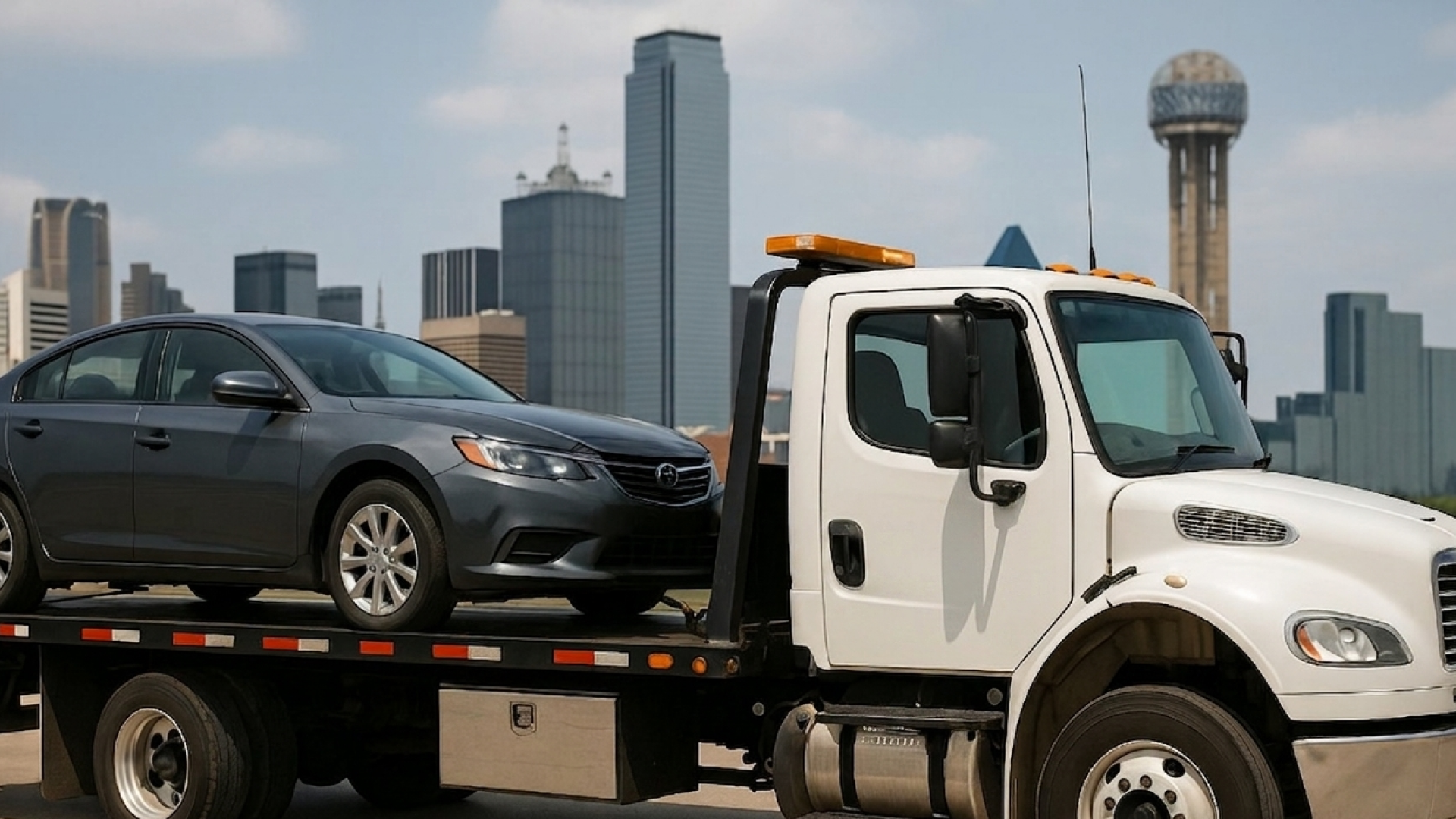
Flatbed towing places the vehicle completely on a flat platform attached to the tow truck. Once loaded, the vehicle's wheels are off the road while it is transported.
This can be particularly useful when a vehicle should not be driven or rolled for an extended distance.
Vehicles That May Benefit From Flatbed Towing
Flatbed towing can be a practical option for:
Four-wheel-drive vehicles
Luxury vehicles
Vehicles with significant mechanical problems
Accident-damaged vehicles
Vehicles with damaged wheels or tires
Vehicles being transported rather than simply moved nearby
Casper Towing Ohio's website specifically identifies flatbed towing as a service for secure vehicle transportation and states that its flatbed equipment is used for low-clearance, AWD, and luxury vehicles.
The appropriate towing method should still be determined based on the individual vehicle and its condition.
Flatbed Towing vs. Wheel-Lift Towing
The best towing method depends on the circumstances.
Flatbed towing: The vehicle is loaded onto the towing platform. How professional flatbed towing protects your vehicle during transport comes down to keeping all four wheels off the roadway, which provides crucial protection during transport.
Wheel-lift towing: A portion of the vehicle is lifted while the remaining wheels stay on the road. This can be suitable for certain towing situations, depending on the vehicle manufacturer's requirements and the condition of the vehicle.
For vehicles with specialized drivetrains, damaged wheels, very low ground clearance, or other complications, understanding the difference between flatbed towing and traditional towing helps a towing professional determine the appropriate method rather than relying on a one-size-fits-all approach.
How Professional Damage-Free Vehicle Transport Works
A careful towing process starts before the vehicle leaves the ground.
Step 1: Assess the Vehicle
The tow operator should determine what condition the vehicle is in and whether it can roll, steer, brake, and be loaded normally.
Accident-damaged vehicles may require additional care because components that appear intact can be compromised.
Step 2: Select the Right Equipment
The operator chooses equipment based on the vehicle's size, weight, drivetrain, clearance, damage, and location.
A vehicle stuck in a ditch may require specialized vehicle recovery equipment before it can be loaded for transportation.
Step 3: Load the Vehicle Carefully
Loading should be performed gradually and with attention to ground clearance, wheel position, ramps, and surrounding obstacles.
Low-clearance vehicles deserve particular attention because steep loading angles can create clearance problems.
Step 4: Secure the Vehicle
Once positioned on the truck, the vehicle needs to be secured correctly using appropriate tie-down equipment and attachment points.
The securing method should account for the vehicle and towing equipment rather than simply relying on a generic approach.
Step 5: Transport the Vehicle
The driver then transports the vehicle while accounting for the added weight, load position, road conditions, traffic, and weather.
Step 6: Unload Carefully
The process does not end when the truck arrives. Unloading should be controlled and performed with the same attention given to loading.
What Drivers Should Do Before a Vehicle Is Towed
There are several simple steps drivers can take to make vehicle transport easier and safer.
Remove Personal Belongings
Take valuables and loose personal items out of the vehicle whenever possible.
Items left inside the cabin or trunk can shift during loading and transportation. Removing unnecessary belongings also makes it easier to document the vehicle's condition.
Take Photos of the Vehicle
Before the tow, photograph the vehicle from several angles if it is safe to do so.
Capture:
Front and rear
Both sides
Wheels and tires
Existing scratches or dents
Accident damage
Interior condition
Dashboard warning lights, when relevant
Photos create a useful record of the vehicle's condition before transportation.
Tell the Tow Operator About Existing Problems
Be specific about anything unusual.
For example, tell the operator if:
The steering does not work normally.
A wheel is damaged.
The vehicle cannot roll.
The brakes are not functioning.
The vehicle has very low ground clearance.
The vehicle has all-wheel or four-wheel drive.
The vehicle has aftermarket modifications.
The vehicle was involved in an accident.
Small details can influence the equipment and loading approach.
When Damage-Free Towing Is Especially Important
Some towing situations deserve extra attention because the vehicle may be vulnerable to additional damage.
Accident-Damaged Vehicles
A vehicle involved in a collision may have damaged suspension, steering, wheels, bumpers, underbody components, or other parts.
Trying to move an accident-damaged vehicle as if it were fully operational can create additional problems. Understanding what happens during a professional accident recovery service shows why specialized equipment and careful positioning are required.
Casper Towing Ohio lists accident recovery and vehicle recovery among its towing services.
Low-Clearance Vehicles
Sports cars and modified vehicles may sit close to the ground.
A standard loading approach may not provide enough clearance around ramps or other equipment. The towing operator should account for the vehicle's clearance before loading.
All-Wheel-Drive Vehicles
AWD vehicles can have specific towing requirements. Depending on the vehicle, improper towing may place unnecessary stress on drivetrain components.
The owner's manual should be consulted when there is uncertainty about the manufacturer's towing requirements.
Vehicles With Damaged Wheels
A vehicle with a bent, broken, or severely damaged wheel may not roll normally.
In these situations, forcing the vehicle to move can cause additional damage. A professional recovery approach may be needed before transportation begins.
Common Misconceptions About Vehicle Towing
Towing is often treated as a simple process, but several common assumptions can create problems.
Myth: Any Tow Truck Can Tow Any Vehicle
Not necessarily.
Tow trucks have different configurations, capacities, and equipment. Vehicle size, weight, drivetrain, clearance, and condition all matter.
Myth: Towing Automatically Causes Damage
Professional towing services are designed to transport vehicles safely. Damage is not an inevitable part of the process.
The risk depends on factors such as equipment selection, vehicle condition, loading technique, securing procedures, and road conditions.
Myth: Flatbed Towing Is Only for Luxury Cars
Flatbed towing can be useful for many types of vehicles, not only expensive or exotic cars.
It can be appropriate for everyday vehicles when their condition or towing requirements make keeping all four wheels off the road beneficial.
Myth: A Vehicle That Starts Can Always Be Driven to a Repair Shop
A vehicle may start but still be unsafe to drive.
Problems involving steering, braking, tires, suspension, overheating, major warning lights, accident damage, or other critical systems may make towing the safer option.
How to Choose a Towing Company for Vehicle Transport
When selecting a towing provider, price is only one consideration. Having a trusted towing company saved in your phone saves crucial time during an emergency.
Ask What Equipment Will Be Used
If your vehicle has special towing requirements, ask whether the provider has the appropriate equipment.
Questions can include:
Will the vehicle be transported on a flatbed?
Can you handle AWD vehicles?
Can you transport a low-clearance vehicle?
How will the vehicle be secured?
Can you recover a vehicle that cannot roll?
Clear answers can help you determine whether the company understands your situation.
Explain Your Vehicle's Condition
Do not simply say, "I need a tow." Knowing what information to provide when calling a tow truck makes dispatching faster and more accurate.
Explain whether the vehicle is:
Disabled
Accident-damaged
Stuck
Unable to start
Unable to steer
Unable to roll
Missing a usable tire
Sitting in a difficult location
Accurate information helps the towing provider send appropriate equipment.
Ask About Pricing Before Dispatch
How much towing costs in Columbus, OH can vary according to factors such as location, vehicle type, distance, equipment, recovery complexity, and the service required.
Ask for a clear estimate before the service begins when possible. Casper Towing Ohio's website states that pricing depends on the vehicle, location, and service needed and promotes upfront pricing.
What to Do If Your Vehicle Breaks Down While Driving
A breakdown is stressful, but your first priority should be safety. Following safety tips for a breakdown on busy roads ensures you stay out of danger while help is on the way.
If possible:
Move the vehicle away from active traffic.
Turn on your hazard lights.
Stay in a safe location.
Avoid standing in traffic lanes or near moving vehicles.
Contact roadside assistance or a towing provider.
Tell the operator your exact location.
Describe the vehicle and its condition.
Follow professional or emergency-service instructions.
Knowing what to do while waiting for emergency towing can keep you safe. If the vehicle is in a dangerous position, such as a traffic lane or another high-risk area, contact the appropriate emergency service when necessary.
Damage-Free Towing and Vehicle Transport: A Practical Checklist
Before arranging a tow, keep this checklist handy:
Vehicle Information
Make and model
Approximate year
Vehicle condition
Drivetrain type
Known mechanical problems
Location Information
Exact location
Direction of travel
Nearby landmark
Highway or road name
Whether the vehicle is in a driveway, parking lot, shoulder, ditch, or accident scene
Transportation Requirements
Destination
Preferred repair facility
Whether the vehicle can roll
Whether the vehicle can steer
Whether the vehicle can start
Whether special equipment may be needed
Providing complete information can help the towing company prepare for the job before the truck arrives.
Why Proper Vehicle Handling Matters Beyond the Tow
A vehicle is often one of the most expensive items a person owns. Even a relatively minor scratch, wheel issue, or underbody problem can create an unwanted repair expense.
Professional vehicle transportation is about more than moving a car. It requires matching equipment to the vehicle, understanding its condition, securing it properly, and treating the vehicle carefully from pickup through delivery.
That approach is especially valuable after accidents or major breakdowns, when the vehicle may already be vulnerable.
For Ohio drivers, choosing a towing provider that offers 24/7 emergency towing assistance, flatbed towing, roadside assistance, vehicle recovery services, and accident recovery can make it easier to get the appropriate type of help for different situations.
Conclusion
Damage-free vehicle towing starts with the right equipment, the right loading method, and careful handling throughout transportation. Flatbed towing can be a useful option for vehicles that need all four wheels off the roadway, including certain AWD, low-clearance, luxury, damaged, or disabled vehicles.
Drivers can also reduce complications by documenting existing damage, removing loose belongings, explaining the vehicle's condition, and providing accurate location information before the tow truck arrives.
The safest towing method is not always the same for every vehicle. A professional assessment helps determine whether flatbed towing, wheel-lift towing, recovery equipment, or another approach is appropriate.
If you need towing or professional roadside assistance in Columbus, OH, Casper Towing Ohio's listed services include emergency towing, flatbed towing, roadside assistance, jump start service, tire change service, fuel delivery service, vehicle recovery, and accident recovery. Contact us or visit our about us page to learn more.
Frequently Asked Questions
What is damage-free vehicle towing?
Damage-free vehicle towing refers to using appropriate equipment and careful procedures to minimize the risk of additional damage while a vehicle is loaded, secured, transported, and unloaded. It is especially important for damaged, low-clearance, AWD, luxury, or disabled vehicles.
Is flatbed towing safer for a vehicle?
Flatbed towing can be a suitable option for many vehicles because the entire vehicle is supported on the towing platform. It can be particularly useful when a vehicle should not be driven or when keeping all four wheels off the road is preferable.
Can an all-wheel-drive vehicle be towed?
Yes, but the towing method should be compatible with the vehicle's drivetrain and manufacturer requirements. Flatbed towing is often considered for AWD vehicles because all four wheels can remain off the roadway during transportation.
Can a damaged vehicle be towed after an accident?
Yes. Accident-damaged vehicles can often be transported using appropriate recovery and towing equipment. Understanding how towing professionals handle accident scene vehicle removal ensures damaged wheels, steering, suspension, or brakes are safely managed.
How can I prevent additional damage during a tow?
Tell the towing company about existing damage and any mechanical limitations. Take photographs before transportation when it is safe, explain whether the vehicle can roll or steer, and ask what equipment will be used.
What information should I give a towing company?
Provide your exact location, vehicle make and model, condition of the vehicle, whether it starts or rolls, known damage, drivetrain type when relevant, and the destination. Accurate information helps the towing provider determine the appropriate equipment.
Does towing cost more for damaged or difficult-to-recover vehicles?
It can. Towing prices may vary based on location, vehicle type, distance, equipment requirements, and the complexity of the recovery. Ask for pricing information before dispatch when possible.
What should I do before a tow truck arrives?
Move to a safe location if possible, turn on hazard lights, remove valuables from the vehicle, photograph existing damage, and keep important vehicle information available. Avoid attempting repairs in an unsafe roadside location.
Is roadside assistance different from towing?
Yes. Roadside assistance helps drivers get back on the road faster by handling issues on-site—such as a dead battery requiring a jump start, a flat tire emergency needing a replacement, or running out of gas. Towing is used when the vehicle needs to be transported elsewhere.
When should I choose towing instead of driving the vehicle?
If the vehicle has serious mechanical problems, accident damage, steering or braking issues, severe tire damage, overheating, or another condition that makes driving unsafe, towing may be the better option. When in doubt, have the vehicle assessed rather than risking further damage.