Introduction
A vehicle can need towing for many reasons: a breakdown, accident, dead battery, flat tire, mechanical failure, or simply the need to transport a vehicle that cannot be safely driven. But not every tow truck handles a vehicle in the same way. For many cars, SUVs, trucks, luxury vehicles, and damaged vehicles, flatbed towing can be the safer and more practical option.
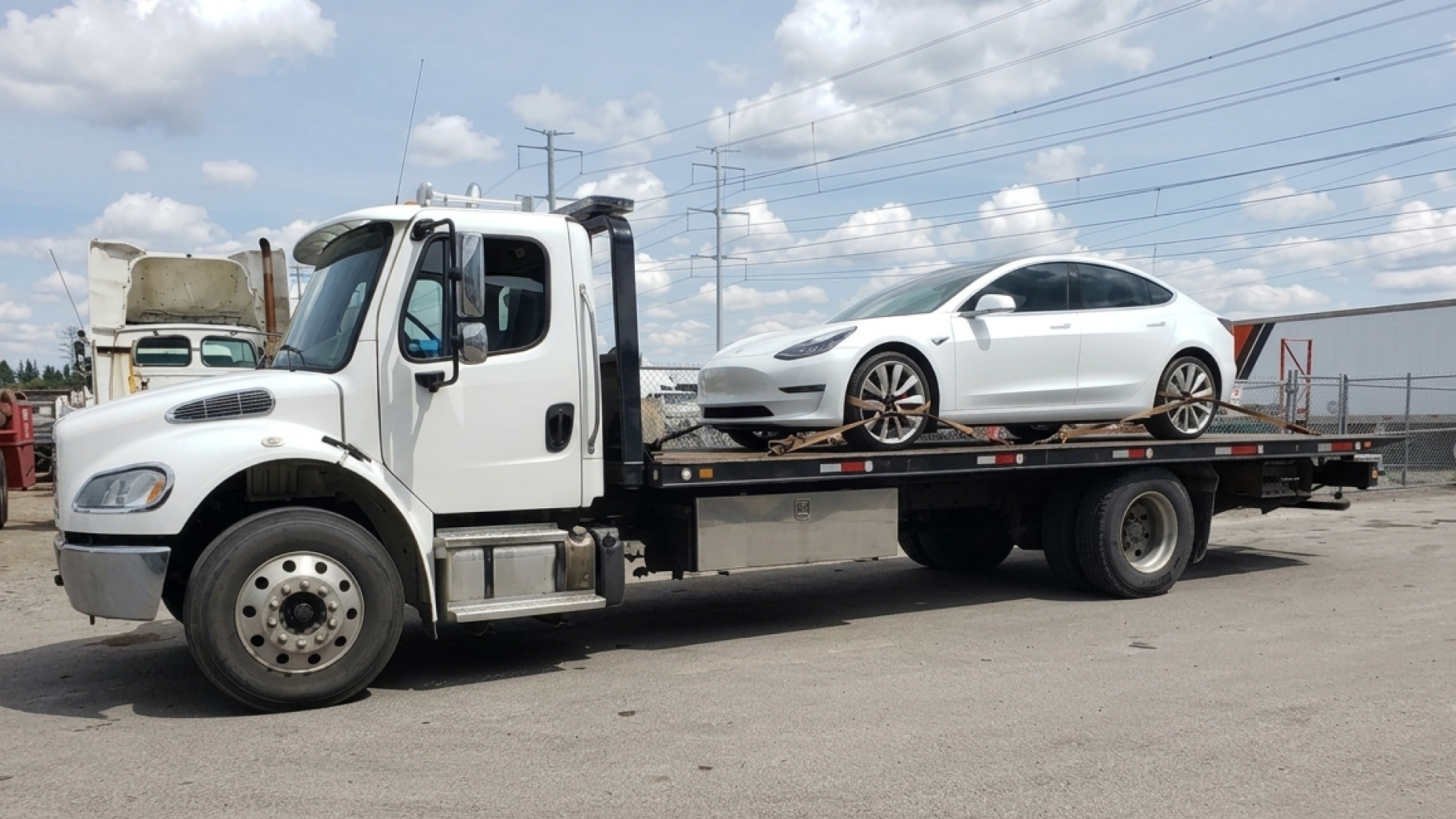
Flatbed towing uses a truck with a long, level platform that carries the entire vehicle off the road. Instead of letting the vehicle's wheels roll behind the tow truck, the vehicle is loaded onto the bed and secured for transportation. This approach can reduce contact between the disabled vehicle and the roadway and is particularly useful when a vehicle has damaged wheels, limited ground clearance, an all-wheel-drive system, or other transportation concerns.
For drivers in Ohio, understanding how flatbed towing works can make an unexpected roadside situation less stressful. Knowing when to request a flatbed tow can also help prevent additional damage to a vehicle that is already disabled.
Casper Towing Ohio provides towing and roadside assistance services, including flatbed towing, vehicle recovery, accident recovery, jump starts, tire changes, and emergency fuel delivery.
What Is Flatbed Towing?
Flatbed towing is a vehicle transportation method in which the vehicle is loaded completely onto the flat platform of a tow truck. Once positioned on the bed, the vehicle is secured using appropriate tie-down equipment before transportation begins.
Unlike a wheel-lift tow, where either the front or rear wheels remain on the road, a flatbed keeps all four wheels off the pavement. This makes it especially useful when the vehicle should not be driven or rolled for an extended distance.
Flatbed tow trucks are commonly used for disabled vehicles, accident-damaged cars, low-clearance vehicles, certain all-wheel-drive vehicles, and vehicles that owners want transported with minimal road contact.
How Does a Flatbed Tow Truck Work?
The process is relatively straightforward, although the exact loading method depends on the vehicle and its condition.
The tow truck positions the flatbed near the disabled vehicle.
The platform is lowered or angled to create a loading surface.
A winch or other appropriate equipment helps move the vehicle onto the platform when the vehicle cannot drive itself.
The vehicle is positioned securely on the bed.
Proper tie-downs are used to secure the vehicle.
The platform is returned to its travel position.
The vehicle is transported to the requested destination.
If the vehicle has significant accident damage, locked wheels, steering problems, or another mechanical issue, the towing professional may need to use additional equipment or take extra precautions during loading.
Is the Entire Vehicle Off the Ground?
Yes. One of the defining characteristics of flatbed towing is that the vehicle is carried on the tow truck rather than being pulled with its tires rolling on the roadway.
That distinction matters because a disabled vehicle may have a problem that makes rolling it unsafe. A damaged suspension component, bent wheel, flat tire, drivetrain problem, or low-clearance body can make conventional towing less suitable.
When Is Flatbed Towing the Right Choice?
Flatbed towing is not automatically necessary for every roadside emergency. The best towing method depends on the vehicle, the type of damage, its condition, and the distance it needs to travel.
There are, however, several situations in which a flatbed is often a strong choice.
When Your Vehicle Has Been in an Accident
After a collision, a vehicle may have damage that is not immediately visible. Steering, suspension, wheels, tires, underbody components, or the drivetrain may be affected.
Trying to drive an accident-damaged vehicle can create additional safety risks. Even if the engine starts, that does not mean the vehicle is safe to operate.
A flatbed can be useful because the entire vehicle can be transported without requiring its damaged wheels to roll along the road.
When Your Vehicle Has All-Wheel Drive
All-wheel-drive vehicles deserve special consideration when towing because their drivetrains can differ from those of conventional two-wheel-drive vehicles.
The correct towing procedure depends on the specific vehicle manufacturer's requirements. In some situations, transporting an AWD vehicle with all four wheels off the ground can be the simplest way to avoid improper wheel movement.
If you are unsure how your AWD vehicle should be towed, tell the towing company the vehicle's make, model, drivetrain, and condition before the truck arrives.
When You Own a Low-Clearance Vehicle
Sports cars, modified vehicles, some luxury cars, and other low-clearance vehicles can be difficult to tow with equipment that requires part of the vehicle to remain close to the roadway.
A flatbed can provide a more suitable loading and transportation method because the vehicle is positioned entirely on the truck platform.
Extra care may still be required when loading a particularly low vehicle. The tow operator should assess the approach angle, clearance, and condition of the vehicle before loading.
When the Vehicle Has Wheel or Tire Damage
A conventional tow can be problematic if a vehicle cannot roll normally.
For example, imagine a car with a severely damaged tire and bent wheel after hitting a pothole or curb. If the wheel cannot safely roll, transporting the vehicle on a flatbed may be more practical than towing it with that wheel on the road.
The same consideration applies when a vehicle has damaged suspension or other components affecting its ability to roll safely.
When the Vehicle Has a Drivetrain Problem
Transmission and drivetrain failures can leave a vehicle unable to move even though the wheels and tires appear intact.
Moving such a vehicle incorrectly can potentially cause further mechanical problems. The towing method should account for the vehicle's drivetrain and manufacturer recommendations.
A flatbed provides a way to transport the vehicle without relying on its wheels to propel or freely roll the vehicle during the trip.
When You Want to Transport a Vehicle Rather Than Simply Tow It
Not every flatbed job involves an emergency.
A vehicle may need transportation because it is being moved to a repair facility, transported after a purchase, relocated, or taken to another destination when it is not practical or appropriate to drive it.
In these cases, a flatbed tow truck can function as a vehicle transportation option rather than simply an emergency recovery vehicle.
Flatbed Towing vs. Wheel-Lift Towing
Understanding the difference between vehicle recovery and towing can help you communicate your needs when requesting roadside assistance.
Flatbed Towing
With flatbed towing:
All four wheels are lifted off the road.
The vehicle rests on a level platform.
The vehicle is secured before transportation.
It can be suitable for many damaged, low-clearance, AWD, and specialty vehicles.
The method is useful when the vehicle should not roll during transport.
Wheel-Lift Towing
Wheel-lift towing raises either the front or rear wheels from the road while the other wheels remain on the ground.
This method can be practical for certain towing situations, particularly when the vehicle is in a condition that allows the remaining wheels to roll safely.
Neither method is universally better. The correct choice depends on the vehicle and the reason it needs to be moved.
Which Towing Method Is Safer?
The safest method is the one that matches the vehicle's condition, drivetrain, manufacturer's requirements, and the circumstances of the tow.
Flatbed towing offers an important advantage when all four wheels should remain off the roadway. However, the towing professional still needs to load and secure the vehicle correctly.
If you are requesting a tow, describe the problem as accurately as possible. Information such as "the car starts but won't move," "the front wheel is damaged," or "the vehicle was involved in a collision" can help the dispatcher determine what equipment may be appropriate.
What Are the Benefits of Flatbed Towing?
Flatbed towing offers several practical advantages, particularly for vehicles that should not be driven or rolled during transportation.
Keeps All Four Wheels Off the Road
The most obvious benefit is that the vehicle does not need to travel with its tires rolling on the pavement.
This can be particularly useful for vehicles with damaged wheels, tires, suspension components, or drivetrain systems.
Reduces Road Contact
Because the vehicle is carried on the tow truck, its tires are not rolling against the road during transportation.
That can make flatbed towing an attractive option for vehicles that are vulnerable to additional wear or damage from being pulled along the roadway.
Works Well for Many Specialty Vehicles
Low-clearance, luxury, performance, classic, and certain modified vehicles may require additional towing considerations.
A flatbed can provide a controlled platform for transporting these vehicles, although the operator should always assess the vehicle before loading.
Useful After Serious Vehicle Damage
If a vehicle cannot steer, roll, or operate normally after an accident, a flatbed may be an appropriate transportation method.
The exact procedure depends on the extent and location of the damage.
What Vehicles Can Be Flatbed Towed?
Flatbed trucks can transport many types of vehicles, provided the truck and equipment are appropriate for the vehicle's size and weight.
Common examples include:
Passenger cars
SUVs
Pickup trucks
Luxury vehicles
Sports cars
Low-clearance vehicles
Many all-wheel-drive vehicles
Accident-damaged vehicles
Disabled vehicles that cannot safely roll
Vehicle weight, dimensions, wheel condition, ground clearance, and damage all matter. A towing professional should know the vehicle type before dispatching equipment.
How to Prepare for a Flatbed Tow
A little preparation can make the towing process easier and safer.
Move to a Safe Location If Possible
If the vehicle can still move safely, get it as far away from moving traffic as practical. Turn on the hazard lights and remain in a safe location.
Do not attempt to move a vehicle if doing so could worsen an accident-related injury or create another safety hazard.
Tell the Dispatcher Exactly What Happened
Tell the Dispatcher Exactly What Happened by giving useful information rather than simply saying, "My car won't start."
Explain:
Vehicle make and model
Your exact location
Whether the vehicle starts
Whether it can roll
Whether the wheels are damaged
Whether the vehicle was involved in an accident
Whether it has AWD or another special drivetrain
Any obvious clearance or access issues
The more accurate the description, the easier it is to determine what type of towing equipment may be needed.
Remove Important Personal Items
Before the vehicle is transported, remove valuables and important personal belongings if it is safe to do so.
If the vehicle has been involved in an accident, prioritize your safety and follow instructions from emergency personnel.
Check the Destination
Know where the vehicle needs to go before the tow begins. This could be a repair shop, dealership, home, storage location, or another authorized destination.
Providing the destination in advance can also help the towing company explain the expected service and pricing.
Common Misconceptions About Flatbed Towing
Flatbed towing is sometimes misunderstood as a service that is only necessary for luxury or exotic cars. That is not the case.
"Flatbed Towing Is Only for Expensive Cars"
False. Flatbeds can be useful for ordinary passenger vehicles, SUVs, and trucks when their condition makes conventional towing unsuitable.
The vehicle's condition matters more than its price.
"A Car Must Be Completely Undrivable"
Not necessarily. A vehicle may still start and move but require transportation rather than being driven.
For example, a vehicle with a damaged tire, drivetrain concern, or accident damage may be better transported than driven to a repair facility.
"Flatbed Towing Prevents All Possible Damage"
No towing method can honestly guarantee that damage-free towing is impossible without proper care.
Safe towing depends on proper equipment, vehicle assessment, loading technique, securement, and attention to the vehicle's specific requirements.
What Should You Ask a Towing Company Before Service?
Before agreeing to a tow, ask a towing company a few straightforward questions.
First, explain the vehicle's condition and ask what type of truck will be dispatched. If you specifically need a flatbed, confirm that the appropriate equipment is available.
You can also ask about the estimated price, destination, expected arrival time, and any information the driver needs when arriving at the vehicle.
For emergency situations, keep the conversation focused on accurate location details and safety first.
Flatbed Towing in Ohio: What Drivers Should Consider
Ohio drivers encounter a wide range of road, weather, and traffic conditions. A vehicle that breaks down on a busy roadway can become both a transportation problem and a safety concern.
If your vehicle is disabled, focus first on getting yourself and your passengers to a safe location when possible. Then provide the towing company with an accurate location and a clear description of the vehicle's condition.
Casper Towing Ohio's website lists flatbed towing alongside emergency towing, roadside assistance, vehicle recovery, and accident recovery. The company identifies Columbus as its primary location and lists service areas including Columbus, Hilliard, Westerville, Reynoldsburg, Dublin, Grove City, Upper Arlington, and Galloway.
The company also states that its fleet uses professional flatbed tow trucks and precision tie-downs for vehicles including AWD, luxury, and low-clearance vehicles.
What Should You Do If Your Vehicle Breaks Down?
If your vehicle stops working, take a calm, methodical approach.
Turn on your hazard lights.
Move away from traffic if you can do so safely.
Stay in a safe location while waiting for assistance.
Call a towing or roadside assistance provider.
Give your exact location and vehicle information.
Explain whether the vehicle can start, steer, and roll.
Tell the dispatcher about accident damage or unusual vehicle characteristics.
Confirm the destination before transportation begins.
If a simple problem such as a dead battery, flat tire, lockout, or empty fuel tank is responsible, roadside assistance may resolve the issue without towing. If the vehicle cannot safely operate, towing may be necessary.
Conclusion
Flatbed towing is a method of transporting a vehicle entirely on the platform of a tow truck rather than allowing some of its wheels to remain on the roadway. That makes it especially useful for accident-damaged vehicles, vehicles with wheel or suspension problems, many AWD vehicles, low-clearance vehicles, and vehicles that should not be driven.
The right towing method depends on the vehicle and the situation. A professional towing provider can evaluate the condition of the vehicle and determine what equipment is appropriate.
If you need emergency roadside assistance in Ohio, providing clear information about your vehicle can help a trusted towing company send the right equipment. Flatbed towing is not simply about moving a vehicle from one location to another; when used appropriately, it is a practical way to transport a vehicle while keeping all four wheels off the road.
Frequently Asked Questions
What is flatbed towing?
Flatbed towing is a method in which a vehicle is loaded completely onto the platform of a tow truck. The vehicle is then secured and transported with all four wheels off the roadway.
When should I choose flatbed towing?
When to choose flatbed towing can be a good decision when a vehicle has accident damage, wheel or suspension problems, low ground clearance, an all-wheel-drive system, or another condition that makes conventional towing unsuitable.
Is flatbed towing better for AWD vehicles?
A flatbed can be an appropriate option for many AWD vehicles because all four wheels remain off the ground. However, towing requirements vary by vehicle, so the manufacturer's recommendations should be considered.
Can a flatbed tow a vehicle with a flat tire?
Yes. A flatbed can transport a vehicle with a flat or damaged tire, particularly when the vehicle cannot safely roll. For more tips, see our guide on flat tire emergencies.
Can flatbed towing be used after an accident?
Yes. Flatbed towing is commonly useful when a collision has affected a vehicle's wheels, steering, suspension, or ability to move safely during a professional accident recovery service.
Is flatbed towing only for luxury cars?
No. Flatbed towing can be used for everyday cars, SUVs, trucks, and other vehicles. The decision is based primarily on the vehicle's condition, drivetrain, size, clearance, and towing requirements.
What information should I give a towing company?
Review what information should you provide when calling a tow truck, including your exact location, vehicle make and model, the problem you're experiencing, whether the vehicle starts or rolls, and any accident or wheel damage.
Can roadside assistance fix my vehicle instead of towing it?
Sometimes. Exploring the benefits of choosing a professional roadside assistance service shows that problems such as a dead battery, flat tire, lockout, or empty fuel tank may be addressed through roadside assistance.
How much does flatbed towing cost in Ohio?
How much does flatbed towing cost in Ohio? The price can vary based on factors such as the vehicle, location, towing distance, equipment required, and circumstances of the service. It is best to request a clear quote from the towing provider before service begins.
What should I do while waiting for a flatbed tow truck?
Learn what to do while waiting for emergency towing service: turn on your hazard lights, move away from traffic if it is safe, and stay in a secure location while waiting.