Introduction
When a vehicle needs to be towed, getting it onto a tow truck is only part of the job. The vehicle also needs to remain stable, properly positioned, and securely restrained throughout the entire trip. That is where professional tie-downs play a critical role.
A quality towing operation does not rely on the vehicle simply sitting on a flatbed or being connected to a basic towing point. Proper restraints help keep the vehicle from shifting, rolling, bouncing, or moving unexpectedly while the tow truck is traveling, braking, turning, or dealing with uneven road surfaces.
Tie-down equipment becomes especially important when transporting vehicles after an accident, moving low-clearance cars, towing all-wheel-drive vehicles, or handling valuable or specialty vehicles. Professional towing companies use appropriate equipment and procedures based on the vehicle, tow method, and circumstances.
Understanding how tie-downs work can help vehicle owners make better decisions when requesting towing services. It also explains why professional recovery equipment protects vehicles during recovery operations and why proper vehicle securement is an essential part of safe, damage-conscious transportation.
What Are Professional Tie-Downs?
Professional tie-downs are restraint systems designed to secure a vehicle to a tow truck, trailer, or other transport platform. Depending on the equipment and vehicle, these systems can include heavy-duty straps, wheel straps, chains, hooks, anchor points, and tensioning devices.
The goal is straightforward: keep the vehicle securely positioned during transportation without putting unnecessary pressure on vulnerable components.
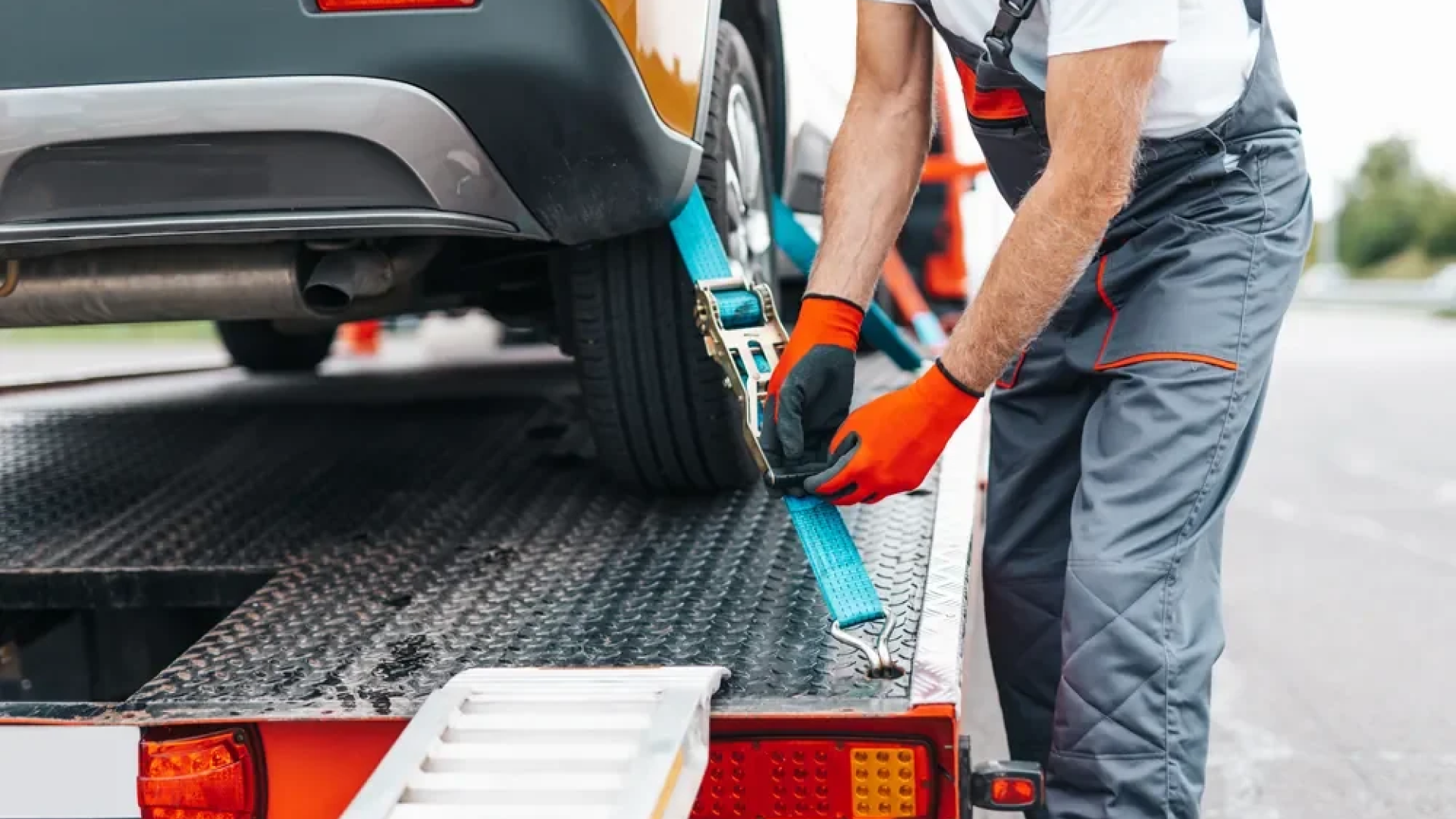
On a flatbed tow truck, the vehicle is driven or winched onto the bed before being secured. Once positioned correctly, the tow operator uses appropriate restraints to prevent unwanted movement.
A tie-down is not simply a rope or strap placed around any convenient part of a vehicle. The restraint needs to be compatible with the vehicle and attached in a way that provides reliable control without damaging tires, suspension components, body panels, brake lines, or other parts.
Why Vehicle Positioning Matters
Before a vehicle is secured, its position on the tow bed matters. The tow operator needs to consider the vehicle's weight distribution, wheel position, clearance, and the characteristics of the tow truck.
Poor positioning can create unnecessary movement or put uneven loads on the transport equipment. Proper positioning gives the restraints a better foundation and helps keep the vehicle stable throughout the trip.
Why Tie-Downs Are Essential During Towing
A tow truck is constantly moving. Even on a smooth road, acceleration, braking, turns, bumps, dips, and changes in road conditions can create forces that affect the transported vehicle.
Tie-downs help control those movements.
Without appropriate restraints, a vehicle could shift on the transport surface. Movement can increase the possibility of vehicle damage and create a serious safety concern for the tow operator, other motorists, and anyone near the transport vehicle.
Professional securement provides several important benefits:
Prevents Unwanted Vehicle Movement
A properly secured vehicle is less likely to roll, slide, or shift while the tow truck is moving. This becomes particularly important during sudden braking or turns. Even a vehicle that appears stable while parked can behave differently once the tow truck is in motion.
Helps Reduce the Risk of Damage
Correct tie-down placement helps prevent unnecessary contact between the vehicle and the towing equipment. For example, a restraint system should not be positioned in a way that places excessive pressure on delicate bodywork or components that were not designed to handle towing forces. This matters even more for vehicles that already have damage from an accident or mechanical failure.
Provides Greater Stability on Uneven Roads
Ohio drivers encounter a wide range of road conditions, including construction zones, potholes, uneven pavement, ramps, and seasonal weather conditions. A properly secured vehicle remains more stable when the tow truck encounters changes in the road surface.
Protects Other Road Users
Vehicle securement is not only about protecting the customer's car. It is also about maintaining a safe transport setup for everyone around the tow truck. A vehicle that shifts unexpectedly can create problems for the tow operator and surrounding traffic. Proper restraints help reduce that risk.
How Professional Tie-Downs Work on a Flatbed Tow Truck
Flatbed towing is commonly used when a vehicle needs to be transported with all four wheels off the road. Understanding how professional flatbed towing protects your vehicle during transport comes down to proper execution.
The general process involves several stages:
Step 1: Positioning the Vehicle
The tow operator first gets the vehicle into the correct position on the flatbed. Depending on the vehicle's condition, this may involve driving it onto the bed, winching it into place, or using additional vehicle recovery equipment. If the vehicle cannot roll normally because of accident damage or mechanical problems, the operator has to account for those limitations during loading.
Step 2: Selecting Appropriate Restraints
The correct restraint depends on factors such as the vehicle's size, weight, wheels, condition, and towing method. Professional equipment may include wheel straps or other purpose-designed restraints. The operator should select equipment that is suitable for the specific vehicle rather than treating every tow the same way.
Step 3: Attaching the Tie-Downs
The restraints are attached at suitable points and positioned to control movement. This is where experience matters. Attaching a strap to an inappropriate location can cause damage or fail to provide adequate restraint. Professional towing practices focus on secure attachment while avoiding unnecessary stress on suspension, steering, body panels, or other sensitive components.
Step 4: Applying Proper Tension
The restraint must be tightened enough to hold the vehicle securely without creating unnecessary pressure. Too little tension may allow movement. Excessive tension can potentially place stress on tires or other vehicle components. The objective is controlled, secure restraint.
Step 5: Checking the Entire Setup
Before the tow truck leaves, the operator should inspect the securement system. This includes checking attachment points, strap placement, tension, vehicle position, and the overall condition of the restraints. A careful final check can catch problems before the vehicle enters traffic.
What Makes Professional Tie-Downs Different?
It may be tempting to assume that any strong strap can be used to secure a vehicle. Vehicle transport is more complicated than that, which is why vehicle recovery requires specialized training and equipment.
Proper Equipment
Professional towing companies use equipment intended for vehicle recovery and transportation rather than improvised restraints. The condition of the equipment matters, too. Worn, damaged, frayed, or otherwise compromised straps should not be treated as interchangeable with properly maintained equipment.
Proper Attachment
The strength of a tie-down system depends on more than the strap itself. The attachment location, anchor point, direction of restraint, and condition of the equipment all matter. A strong strap attached incorrectly does not create a reliable securement system.
Professional Inspection
An experienced tow operator can identify issues that may not be obvious to a vehicle owner. For example, a vehicle involved in an accident may have hidden damage affecting its wheels, suspension, steering, or frame. That can change how the vehicle should be loaded and secured.
Tie-Downs and Different Types of Vehicles
Not every vehicle should be treated exactly the same way during towing.
Passenger Cars
Most standard passenger cars can be transported using appropriate flatbed towing equipment and wheel-based restraints. The operator still needs to account for the vehicle's weight, tire condition, ground clearance, and overall condition.
SUVs and Pickup Trucks
Larger vehicles may require different considerations because of their size and weight. The tow operator must ensure the transport equipment is appropriate for the vehicle and that the securement system provides adequate control.
Low-Clearance Vehicles
Sports cars and other low-clearance vehicles can require extra care during loading and unloading. Knowing why flatbed towing is a smart option for low-clearance vehicles helps avoid unnecessary contact with the underside or body of the vehicle.
All-Wheel-Drive Vehicles
AWD vehicles can have specific towing considerations depending on their design and condition. Learning how flatbed towing helps protect AWD vehicles during transport highlights why keeping all four wheels off the road is a practical option.
Damaged Vehicles
Accident-damaged vehicles present additional challenges. A damaged wheel, suspension component, steering system, or body structure may affect how the vehicle can be loaded and secured. In these situations, the operator needs to evaluate the vehicle before deciding how to handle it.
Common Tie-Down Mistakes to Avoid
Many towing problems begin with assumptions about what is "good enough." Several common mistakes can compromise vehicle securement:
Using Improvised Restraints: Ropes, household straps, or unsuitable hardware are not substitutes for equipment intended for vehicle transportation.
Attaching to the Wrong Component: Not every part of a vehicle is designed to withstand towing forces. Attaching restraints to inappropriate components can cause damage or provide inadequate control.
Ignoring Vehicle Condition: A vehicle with damaged tires, suspension, steering, or bodywork may require a different loading and securement approach.
Failing to Recheck the Setup: A securement system should be inspected before transportation begins. If something looks loose, damaged, twisted, or incorrectly positioned, the problem should be addressed before departure.
Assuming Weight Alone Keeps a Vehicle Stable: A heavy vehicle is not automatically secure simply because it is sitting on a flatbed. The vehicle needs to be restrained appropriately so it remains in position while the tow truck is moving.
How Professional Tie-Downs Support Damage-Free Towing
The phrase "damage-free towing" should never be interpreted as a guarantee that no vehicle can ever be damaged during transportation. Accidents, pre-existing damage, road conditions, and unexpected circumstances can affect a tow.
What professional securement does provide is a controlled method for reducing avoidable movement and handling the vehicle carefully.
Our professional flatbed service provides secure vehicle transport with specialized equipment and precision tie-downs for vehicles such as AWD, luxury, and low-clearance cars. That approach is particularly valuable when a vehicle is already vulnerable.
For example, imagine a car has been involved in a collision and has a damaged front wheel. The objective is not simply to pull the vehicle onto the truck. The operator needs to consider how the vehicle can be loaded without creating additional damage and how it can be restrained for the journey. That is where professional judgment and appropriate towing equipment make a meaningful difference.
When Should You Request Professional Towing?
Some drivers try to move a disabled vehicle themselves because they believe the problem is minor. That can create additional risks when the vehicle cannot be safely driven or moved.
Professional towing may be appropriate when:
The vehicle has been involved in an accident.
The vehicle cannot start or move safely.
The steering or suspension has been damaged.
A wheel or tire is severely damaged and requires a tire change service or transport.
The vehicle has significant mechanical problems.
The vehicle needs transportation to a repair facility.
The vehicle has low ground clearance.
The vehicle requires flatbed transportation.
The vehicle is stuck and needs vehicle recovery services.
You are uncertain about the safest way to move it.
We offer reliable emergency towing, flatbed transport, vehicle recovery, and accident recovery for drivers facing road emergencies.
What Drivers Can Do Before the Tow Truck Arrives
Vehicle owners can make the towing process easier and safer by preparing as much information as possible.
Move to a Safe Location if Possible
If the vehicle can be moved without creating additional damage or risk, get it away from active traffic. Knowing what to do while waiting for emergency towing service ensures your safety. If it cannot be moved, turn on hazard lights and follow recommended safety tips for drivers experiencing a breakdown on busy roads.
Describe the Vehicle's Condition
Tell the towing company whether the vehicle starts, rolls, steers, or has visible damage. Knowing what information you should provide when calling a tow truck helps the dispatcher determine what equipment may be needed.
Remove Loose Personal Items
Secure or remove loose items from the vehicle before towing when practical. Objects inside the vehicle can move during loading and transportation.
Take Photos Before the Tow
If it is safe to do so, photographs of the vehicle's condition before loading can provide a useful record, particularly after an accident. Understanding how to safely handle an accident before your vehicle is recovered helps protect both you and your property.
Why Professional Securement Matters More Than Speed Alone
A quick tow is useful, but speed should not come at the expense of proper vehicle handling.
The safest towing process balances responsiveness with careful preparation. A tow operator needs enough time to assess the vehicle, choose appropriate equipment, load it correctly, secure it, and inspect the setup before driving away.
A professional towing company should be prepared to explain what type of towing equipment is being used and why it is appropriate for the vehicle.
For customers, asking simple questions can provide reassurance:
Is a flatbed appropriate for my vehicle?
How will the vehicle be secured?
Does the vehicle have any condition that changes the towing method?
Does the truck have the appropriate equipment for the vehicle?
Where is the vehicle being transported?
Clear communication can make an already stressful towing situation easier to manage.
The Bigger Picture: Safe Vehicle Transportation
Tie-downs are only one part of professional towing.
Safe transportation also depends on the tow truck, loading method, recovery equipment, operator experience, vehicle condition, road conditions, and final inspection.
A professional approach treats the vehicle as cargo that needs to remain controlled from the moment it is loaded until it reaches its destination. That principle applies to everyday breakdowns as well as more complicated situations involving accident recovery services or specialized transport.
For drivers, choosing a provider that offers 24/7 roadside assistance, flatbed towing, and recovery services helps reduce unnecessary risk during vehicle emergencies.
Conclusion
Professional tie-downs are a fundamental part of safe vehicle transportation. They help keep a vehicle positioned on the tow truck, reduce unwanted movement, and support careful handling during braking, turns, bumps, and changing road conditions.
The quality of a towing job is not determined only by how quickly a truck arrives. Proper vehicle assessment, appropriate equipment, careful loading, correct restraint placement, and a final inspection all contribute to responsible towing.
For vehicle owners, the main takeaway is simple: securement should never be treated as an afterthought. When a car, SUV, truck, luxury vehicle, or accident-damaged vehicle needs transportation, professional towing equipment and proper tie-down procedures provide an important layer of protection.
If your vehicle cannot be driven safely, professional towing can help move it without relying on improvised methods. A qualified tow operator can assess the situation, select an appropriate towing method, and secure the vehicle for transportation. If you ever need help, feel free to contact us for professional assistance.
Frequently Asked Questions
1. How do tie-downs keep a vehicle secure during towing?
Tie-downs restrain the vehicle so it remains in its intended position on the tow truck. Properly selected and attached restraints help limit rolling, sliding, shifting, and other unwanted movement during transportation.
2. Are tie-downs necessary for flatbed towing?
Yes. A vehicle should be properly secured on a flatbed rather than simply relying on its weight to keep it stationary. The specific restraint method depends on the vehicle and towing equipment.
3. Can tie-downs damage a vehicle?
Improperly selected or incorrectly positioned restraints can potentially damage vehicle components. Professional operators use appropriate equipment and attachment points to secure the vehicle while minimizing unnecessary pressure on sensitive parts.
4. Why is flatbed towing useful for damaged vehicles?
Flatbed towing keeps the vehicle completely off the roadway during transportation. This can be useful for vehicles with certain mechanical, tire, steering, suspension, accident-related, or drivetrain problems.
5. How are low-clearance vehicles secured during towing?
Low-clearance vehicles require careful loading and securement to avoid unnecessary contact with the ground or towing equipment. The operator should consider ground clearance, loading angles, tire position, and appropriate restraint placement.
6. Can an AWD vehicle be transported on a flatbed?
A flatbed can be suitable for transporting many AWD vehicles because all four wheels remain off the road. The towing method should still account for the vehicle manufacturer's requirements and its condition.
7. What should I tell a towing company before they arrive?
Provide your location, vehicle type, whether the vehicle starts or rolls, and any known damage. Mention flat tires, collision damage, steering problems, low clearance, locked wheels, or other conditions that could affect loading.
8. Is it safe to tow an accident-damaged vehicle myself?
It may not be. Accident damage can affect steering, suspension, wheels, brakes, or structural components. Professional towing allows the vehicle to be assessed and transported using equipment suited to its condition.
9. What towing services are available for roadside emergencies?
Roadside towing companies may provide services such as emergency towing, flatbed towing, vehicle recovery, accident recovery, jump start services, tire changes, and fuel delivery. The available service depends on the provider and the situation.
10. How can I request towing or roadside assistance?
Contact a professional towing provider and give the dispatcher your exact location, vehicle information, and description of the problem. Clear information helps the company determine the appropriate equipment and service for the situation.