What to Do When Your Car Runs Out of Fuel on the Road
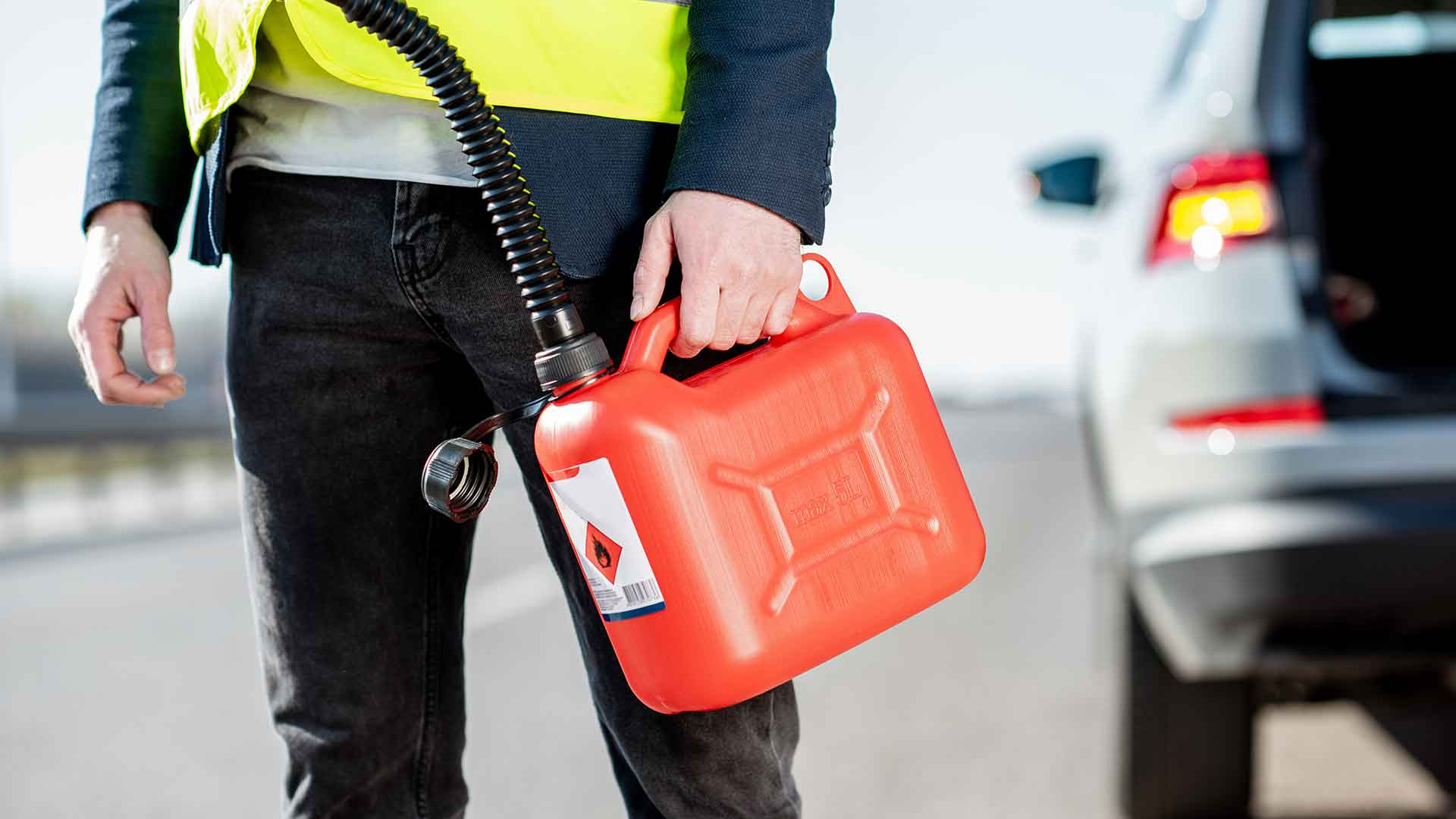
Running out of fuel can happen even when you normally keep a close eye on your gas gauge. A long commute, unexpected traffic, a missed fuel stop, an unfamiliar route, or a faulty fuel-level reading can leave you with an empty tank and a vehicle that will not go anywhere.
When your car runs out of gas on the road, the priority is not finding fuel as quickly as possible. The first priority is getting yourself and your vehicle into the safest practical position. A disabled vehicle can become especially concerning when it is stopped near moving traffic, on a highway shoulder, or in an unfamiliar area.
The good news is that running out of fuel does not automatically mean you need a tow. If the vehicle is otherwise functioning properly, emergency fuel delivery may be enough to get you moving again. If the car still will not start after receiving fuel, roadside assistance or emergency towing may be necessary.
Knowing what to do before help arrives can make an inconvenient situation much easier to manage. You can also read more about how running out of gas how fuel delivery services save time and stress.
What Should You Do Immediately After Your Car Runs Out of Fuel?
The first few minutes matter. Once the engine stops because the vehicle has run out of gas, focus on safety rather than trying to solve the fuel problem yourself.
If the vehicle still has enough momentum and you can safely move it, guide it toward the shoulder, a parking area, or another location away from active traffic. Do not make a sudden or dangerous maneuver simply to get farther off the road.
Once stopped:
Turn on your hazard lights.
Put the vehicle in park and apply the parking brake.
Assess the surrounding traffic before opening the door.
Stay in a safe position while waiting for assistance.
Contact a roadside assistance provider for fuel delivery.
Give the provider your exact location and explain that the vehicle has run out of fuel.
If you are on a highway, be especially cautious around passing traffic. Avoid standing beside the vehicle unnecessarily, and do not attempt to walk along a busy roadway to find a gas station unless there is no safer alternative. For additional tips, check out these safety tips for drivers experiencing a breakdown on busy roads.
Should You Turn on Your Hazard Lights?
Yes. Hazard lights help make a disabled vehicle more visible to approaching drivers.
They are particularly useful when your vehicle has stopped unexpectedly, although they do not make it safe to remain in a dangerous traffic position. If you can safely move the vehicle farther away from traffic, do so.
Your hazard lights should be viewed as a visibility measure, not a substitute for moving to a safe location.
Should You Stay Inside the Vehicle?
The safest choice depends on the circumstances and your exact location.
If your vehicle is safely off the roadway, remaining inside with the doors secured may be appropriate while you wait for assistance. If the vehicle is stopped in an immediately dangerous position, getting to a safer location may be necessary when doing so can be accomplished safely.
Use your judgment based on traffic, weather, surroundings, and the location of the vehicle.
Why Walking to a Gas Station May Not Be the Best Option
Finding the nearest gas station may seem like the obvious solution, but walking away from a disabled vehicle can create additional problems.
A gas station may be farther away than it appears, particularly on a highway or rural road. You may also have to walk alongside traffic, cross busy roads, carry a fuel container, and return to the vehicle.
There is another concern: leaving a vehicle unattended can make it harder for roadside assistance personnel to locate you and may leave the vehicle exposed to passing traffic or other hazards.
Professional fuel delivery provides another option. Instead of leaving the vehicle to search for fuel, you can request assistance and remain with the vehicle while help is dispatched.
How Does Emergency Fuel Delivery Work?
Fuel delivery is a roadside assistance service designed for situations where a vehicle has run out of fuel.
The basic process is straightforward:
Step 1: Contact Roadside Assistance
Tell the provider that your vehicle has run out of fuel. Be specific about whether you need gasoline or another type of fuel.
Step 2: Provide Your Location
Give the exact location of the vehicle whenever possible. Helpful details include:
Street name
Highway or interstate
Exit number
Nearest intersection
Direction of travel
Nearby business or landmark
Location pin from your phone
Accurate location information can make it easier for the roadside technician or tow operator to find you. (Jordan Towing LLC)
Step 3: Wait in a Safe Location
Once assistance has been requested, avoid unnecessary movement around the vehicle. Keep your hazard lights activated when appropriate and remain aware of surrounding traffic.
Step 4: Receive the Fuel
The roadside provider brings fuel to your location. Once the vehicle has enough fuel, you can attempt to restart it.
If it starts normally and there are no other warning signs, you may be able to continue your trip.
What If Your Car Still Won't Start After Getting Fuel?
Adding fuel does not guarantee that a vehicle will start.
If the engine remains unable to start, the empty tank may not have been the only problem. You could be dealing with a weak battery, starter issue, fuel-system problem, electrical fault, or another mechanical issue.
At that point, continuing to repeatedly turn the ignition or attempting roadside repairs may not solve the problem.
Roadside assistance can help determine what type of service is appropriate. If the vehicle cannot be safely driven, towing may be the next step.
Casper Towing Ohio currently lists fuel delivery alongside roadside assistance, emergency towing, jump-start service, tire changes, flatbed towing, vehicle recovery, and accident recovery. (Jordan Towing LLC)
Fuel Delivery vs. Towing
The two services solve different problems.
Fuel delivery is generally appropriate when the vehicle is mechanically sound but cannot continue because it has run out of fuel.
Towing is generally appropriate when the vehicle cannot safely or reliably continue driving, even after the immediate roadside problem has been addressed.
For example, if your car runs out of gas and starts normally after receiving fuel, towing may not be necessary. If it receives fuel but still will not start, towing or additional roadside assistance may be required.
What Information Should You Give the Roadside Assistance Provider?
When requesting fuel delivery, provide enough information for the provider to understand both your location and your situation.
At minimum, be ready to provide:
Your exact location
Vehicle make, model, and color
Whether the vehicle is on a highway or local road
Direction of travel
Nearest exit or intersection
Type of fuel needed
Whether the vehicle is safely off the roadway
Whether anyone in the vehicle needs immediate assistance
If you are unsure about the exact location, check your phone's map application. A nearby exit, mile marker, business, or recognizable landmark can help.
Also explain if the vehicle stopped suddenly, whether it showed any warning lights, and whether you noticed another problem before it stopped.
That information can help the provider determine whether fuel delivery alone is likely to address the situation.
What Should You Do If You Run Out of Gas on a Highway?
Running out of fuel on a highway requires extra caution because vehicles may be traveling at high speeds nearby.
If possible and safe, steer the vehicle toward the shoulder or another designated safe area. Turn on the hazard lights and keep your attention on approaching traffic.
Do not stand behind or directly beside the vehicle unnecessarily. Do not attempt to cross multiple lanes of traffic to reach a gas station or another location.
If you have a roadside emergency kit, reflective equipment may help increase visibility, but never place yourself in a dangerous position simply to set up warning equipment.
Once you are in the safest practical location, contact roadside assistance and provide your highway, direction of travel, exit or mile marker, and other identifying information.
What If There Is No Shoulder?
A road without a usable shoulder can make a fuel emergency more complicated.
If the vehicle cannot be moved to a safer position, stay alert to traffic and contact roadside assistance as soon as possible. Tell the provider that the vehicle is stopped in an active roadway or another potentially hazardous position.
If the situation presents an immediate danger to you or other road users, contact emergency services as appropriate.
Common Reasons Drivers Run Out of Fuel
An empty tank is not always caused by simply forgetting to fill up.
Some common situations include:
Unexpected Traffic Delays
A trip that normally takes 30 minutes can take considerably longer when traffic comes to a standstill. Stop-and-go driving can also change how far you can travel on the fuel remaining in the tank.
Missed Fuel Stops
Drivers sometimes plan to stop at a particular gas station only to discover that it is closed, inaccessible, or farther away than expected.
Unfamiliar Roads
When traveling somewhere new, it can be difficult to judge how frequently fuel stations will appear along the route.
Misjudging the Fuel Gauge
A driver may assume there is enough fuel remaining to reach the next station, only to discover that the estimate was inaccurate.
Heavy Traffic or Route Changes
Detours, road closures, construction, and unexpected delays can extend a trip beyond the original plan.
Busy Schedules
A driver who is focused on work, appointments, school, or other commitments may overlook a low fuel warning.
These situations are ordinary enough that having a plan for an empty fuel tank is worthwhile.
How Can You Prevent Running Out of Fuel?
The easiest roadside fuel emergency to manage is the one you avoid.
You can reduce the likelihood of running out of gas by making fuel planning part of your normal driving routine.
Refuel Before Long Trips
Do not wait until the tank is nearly empty before looking for a gas station during a long trip. If you are traveling through an unfamiliar area, identify potential fuel stops before leaving.
Pay Attention to Warning Signs
Treat a low-fuel warning as a reminder to find fuel rather than assuming you can continue for a specific number of miles.
The actual distance remaining can vary depending on the vehicle, driving conditions, traffic, terrain, and other factors.
Check Your Route
Before a longer drive, look at the route and identify areas where fuel may be limited.
This is especially useful when traveling through rural areas or taking less familiar routes.
Keep Your Phone Charged
A charged phone gives you a way to contact roadside assistance, check your location, and communicate with others if an emergency occurs.
A vehicle charger or portable battery pack can also be useful for longer trips.
Common Misconceptions About Running Out of Gas
There are several assumptions that can make a fuel emergency more difficult than it needs to be.
"I Can Just Walk to the Nearest Gas Station."
You might be able to, but the station may be farther away than expected. Walking beside a busy roadway can also expose you to unnecessary traffic risks.
Fuel delivery can allow you to remain with the vehicle while assistance comes to you.
"I Have Enough Fuel Because the Gauge Still Shows Something."
A fuel gauge is not a precise measurement of how many miles you can safely travel. Traffic, driving conditions, terrain, and vehicle characteristics can affect fuel consumption.
Treat a low-fuel warning as a prompt to refuel.
"Running Out of Gas Always Means I Need a Tow."
Not necessarily. If the vehicle is otherwise operating correctly, fuel delivery may resolve the immediate problem.
If the vehicle will not start after receiving fuel, however, towing or additional roadside assistance may be necessary.
"I Should Keep Trying to Start the Car."
Repeated attempts may not solve an empty-fuel situation. Once you know the tank is empty, focus on getting to a safe position and arranging assistance.
If the vehicle still will not start after receiving fuel, have the situation assessed rather than continuing to experiment on the roadside.
What Should You Keep in Your Car for a Fuel Emergency?
A few basic items can make roadside situations easier to manage.
Consider keeping:
A phone charger or portable power bank
Flashlight
Reflective vest or visibility equipment
Basic first-aid supplies
Drinking water
Vehicle owner's manual
Emergency contact information
Tire-pressure gauge
Jumper cables or an appropriate battery booster
These items do not replace professional roadside assistance, but they can help you stay prepared while waiting for help.
When Should You Call for Towing Instead of Fuel Delivery?
Fuel delivery makes sense when an empty tank is the only reason your vehicle cannot continue.
Towing may be more appropriate when:
The vehicle still will not start after fuel is added.
The engine is making unusual noises.
Warning lights indicate a serious mechanical problem.
The vehicle was involved in an accident.
The vehicle is in an unsafe location and cannot be driven.
You suspect a mechanical or electrical failure.
Continuing to drive could cause additional damage.
Professional towing services can transport a disabled vehicle when roadside assistance cannot resolve the underlying problem. Flatbed towing may also be appropriate for certain vehicles or situations where keeping the vehicle's wheels off the road is preferred. (Jordan Towing LLC)
What Is the Safest Way to Handle an Empty Fuel Tank?
The safest approach is simple: protect yourself first, then solve the fuel problem.
Move away from active traffic if you can do so safely. Make the vehicle visible with hazard lights, avoid unnecessary roadside activity, and contact professional assistance.
If you are in Columbus or the surrounding Central Ohio area, Casper Towing Ohio provides fuel delivery as part of its roadside assistance services. The company also lists emergency towing and vehicle recovery for situations that require more than fuel delivery. (Jordan Towing LLC)
The goal is not simply to get fuel into the tank. The goal is to handle the roadside emergency without creating another safety problem.
Conclusion
Running out of fuel is frustrating, but it does not have to become a major roadside crisis. The first priority should always be safety: move the vehicle away from traffic when possible, activate the hazard lights, stay aware of your surroundings, and request professional assistance.
If the vehicle is otherwise working properly, fuel delivery may be all you need. If it still will not start or another mechanical problem is present, roadside assistance or towing may be the more appropriate option.
Planning ahead also helps. Watch your fuel level, allow extra fuel for unexpected traffic or detours, and keep your phone charged during longer trips.
For Columbus and Central Ohio drivers, professional roadside assistance can provide fuel delivery when an empty tank brings a trip to an unexpected stop. Knowing who to contact and what information to provide can make the experience considerably less stressful. (Jordan Towing LLC)
Frequently Asked Questions
What should I do if my car runs out of gas on the road?
Move the vehicle to a safe location away from traffic if possible, turn on your hazard lights, remain aware of your surroundings, and contact roadside assistance. Avoid walking along a busy road to search for fuel when professional fuel delivery is available.
Can roadside assistance bring gas to my car?
Yes. Emergency fuel delivery is a roadside assistance service designed for vehicles that have run out of fuel. A provider can bring fuel to your location so you do not have to leave your vehicle to find a gas station.
Do I need a tow truck if I run out of fuel?
Not necessarily. If running out of fuel is the only problem and the vehicle starts normally after receiving fuel, fuel delivery may be sufficient. If the vehicle still will not start, towing or additional roadside assistance may be needed.
Is it safe to walk to a gas station after running out of gas?
Walking along a busy roadway can expose you to traffic and other hazards. If possible, remain with your vehicle in a safe location and request fuel delivery rather than walking a long distance beside an active road.
What information should I provide when requesting fuel delivery?
Provide your exact location, vehicle make and model, direction of travel, highway or street name, nearby exit or intersection, and the type of fuel required. Mention whether the vehicle is safely off the roadway.
What happens if my car won't start after fuel is delivered?
If the vehicle still will not start after receiving fuel, another issue may be present. A dead battery, starter problem, fuel-system issue, or mechanical fault could prevent the engine from starting. Roadside assistance or towing may then be necessary.
Can I run out of fuel even if my gas gauge shows fuel remaining?
Yes. A fuel gauge is not a guarantee of the exact distance you can travel. Fuel consumption can change based on traffic, driving conditions, terrain, and vehicle characteristics. Refueling before the tank becomes critically low is a safer approach.
What should I do if I run out of gas on a highway?
If it is safe, move toward the shoulder or another area away from moving traffic. Turn on your hazard lights and contact roadside assistance. Give the provider your highway, direction of travel, exit or mile marker, and other location details.
How can I prevent running out of fuel during a long trip?
Refuel before the tank becomes nearly empty, especially before traveling through unfamiliar or rural areas. Check your route for fuel stops, account for potential traffic delays, and avoid relying entirely on the estimated remaining range displayed by the vehicle.
Can fuel delivery help if my vehicle is in an unfamiliar area?
Yes. Fuel delivery can be particularly useful when you are unfamiliar with the area and do not know where the nearest fuel station is. Providing an accurate location or map pin can help the roadside provider find your vehicle.