

Introduction
A vehicle breakdown can turn an ordinary drive through Westerville, Ohio, into a stressful situation. A dead battery in a parking lot, a flat tire on the way to work, or an engine problem along a busy road can leave drivers wondering what to do next. Knowing when to request roadside assistance, when a tow truck is necessary, and how to protect yourself while waiting can make the experience safer and easier to manage.
Westerville drivers travel through residential neighborhoods, shopping areas, business districts, and connecting routes around the Columbus metropolitan area. Each setting presents different challenges when a vehicle stops working. A car that will not start in a driveway requires a different response from one that becomes disabled in a traffic lane.
This guide explains how towing and roadside assistance work, which service may fit your situation, what information to provide when requesting help, and how to prepare for common roadside emergencies. It also covers towing costs, vehicle safety, and practical steps drivers can take before a tow truck arrives.
Understanding Towing and Roadside Assistance in Westerville
Towing and roadside assistance are related services, but they address different problems. Understanding the distinction helps drivers request the right type of help without attempting an unsafe repair or arranging an unnecessary tow.
What Is Roadside Assistance?
Roadside assistance provides help with certain vehicle problems that can potentially be resolved at the location where the vehicle stops. The goal is to address the immediate issue when an on-site solution is practical and safe.
Depending on the provider, available services from roadside assistance may include:
Battery jump-starts for vehicles that will not start.
Flat-tire assistance and spare-tire installation.
Emergency fuel delivery when a vehicle runs out of gas.
Vehicle lockout assistance when keys are locked inside.
Basic troubleshooting for certain roadside problems.
Not every problem can be fixed at the roadside. A damaged wheel, serious engine malfunction, or vehicle that cannot be operated safely may require towing to a repair shop or another suitable destination.
What Is Towing Service?
Towing involves transporting a disabled, damaged, or otherwise inoperable vehicle using appropriate towing equipment. It is often necessary when a vehicle cannot safely continue its journey or when roadside assistance cannot resolve the underlying problem.
Drivers may need towing after a collision, mechanical failure, overheating, a serious tire problem, or an electrical fault. Towing can also be useful when a vehicle needs to be moved to a mechanic, dealership, residence, or another agreed-upon destination.
The appropriate towing method depends on the vehicle, its condition, the location, and the type of damage. A vehicle with steering or suspension damage, for example, may require different handling from one with a dead battery.
How to Decide Which Service You Need
Start by considering whether the vehicle can be made safe and operational at its current location.
The engine will not start: A jump-start may help if the battery is discharged and there is no indication of a more serious electrical problem.
The vehicle has a flat tire: Tire assistance may be sufficient if the wheel and surrounding components are safe to handle.
The vehicle is overheating: Stop driving and arrange professional assistance if the cause cannot be safely addressed.
The car has collision damage: Request towing if damage affects safe operation or the vehicle's ability to move.
The vehicle is blocking traffic: Prioritize personal safety and contact emergency services when necessary before arranging recovery.
When the cause is uncertain, explain the symptoms to the roadside provider. Accurate information helps the dispatcher determine whether to send roadside assistance or a tow truck.
Common Reasons Westerville Drivers Need Roadside Help
Vehicle problems can happen without warning, even when a car has been serviced regularly. Recognizing common warning signs can help drivers respond before a minor inconvenience becomes a larger problem.
Dead Batteries and Starting Problems
A vehicle that clicks when the ignition is turned, cranks slowly, or fails to start may have a weak or discharged battery. Leaving lights on, extreme temperatures, battery age, or a charging-system problem can contribute to starting difficulties.
If the vehicle is parked safely, roadside assistance may be able to provide a jump-start. However, repeated starting attempts are not always helpful, particularly when the cause is unknown.
Never attempt to jump-start a battery that is visibly damaged, leaking, or suspected of being frozen. Follow the vehicle manufacturer's instructions, since incorrect connections can damage electrical components or create a safety hazard.
If the vehicle starts but the battery warning light remains illuminated, the charging system may need inspection. A jump-start does not necessarily solve the underlying problem.
Flat Tires and Tire Damage
A puncture, damaged sidewall, or sudden loss of tire pressure can make driving unsafe. Continuing on a flat tire can damage the wheel and other components, while changing a tire beside moving traffic exposes the driver to additional risks.
If you experience a flat, reduce speed gradually and move to a safe location if possible. Turn on your hazard lights and avoid abrupt steering or braking.
Roadside tire change assistance may be appropriate when a usable spare tire is available and the vehicle can be handled safely. If the tire is shredded, the wheel is damaged, or the vehicle has no spare, towing may be the better option.
Engine Overheating
An overheating engine can suffer serious damage if the vehicle continues running. Warning signs may include a temperature gauge entering the danger zone, a temperature warning light, steam from under the hood, or unusual smells.
Pull over in a safe location and switch off the engine when appropriate. Never remove a radiator cap while the cooling system is hot, because pressurized coolant can cause severe burns.
Allow the vehicle to cool and request professional assistance. If the cause is unclear or the temperature warning returns, arrange towing rather than risking further engine damage.
Fuel Problems and Electrical Failures
Running out of fuel can leave a driver stranded even when the vehicle was operating normally moments earlier. Depending on availability, roadside assistance may deliver enough fuel to help the driver reach a fueling station.
Electrical problems can be harder to identify. Flickering lights, repeated stalling, dashboard warnings, or a vehicle that loses electrical power while running may indicate a battery, alternator, wiring, or related issue.
Avoid assuming that every starting problem is caused by the battery. Describe the symptoms and warning lights to the service provider, and arrange towing if the vehicle cannot operate reliably.
What to Do When Your Car Breaks Down in Westerville
A breakdown can be unsettling, but following a clear sequence helps you make safer decisions. Your first priority is getting yourself and your passengers away from immediate danger.
Step 1: Move to a Safer Location
If the vehicle is still controllable, steer toward a safe shoulder, parking lot, or other location away from moving traffic. Avoid stopping on blind curves, narrow shoulders, or other places where approaching drivers may have little room to react.
If the vehicle loses power or cannot be moved safely, do not put yourself at risk by trying to push it through traffic. Turn on your hazard lights and contact emergency services if the vehicle creates an immediate traffic danger.
Step 2: Assess Your Surroundings
Check whether the vehicle is exposed to traffic, poor visibility, severe weather, or another immediate hazard. If you are on a busy road, an elevated roadway, or a narrow shoulder, remaining inside with your seat belt fastened may be safer than exiting into traffic.
If you can reach a protected location without crossing moving traffic, do so when appropriate. Keep children and other passengers together, and do not stand behind or directly beside a disabled vehicle in an exposed area.
Step 3: Identify the Problem Without Taking Unnecessary Risks
Look for obvious warning signs, such as a flat tire, smoke, a temperature warning, or a dashboard battery light. Do not crawl underneath the vehicle, handle damaged electrical components, or attempt repairs beside moving traffic.
If you smell fuel, see flames, or notice heavy smoke, move away from the vehicle when safe and contact emergency services. Do not continue troubleshooting a potentially dangerous situation.
Step 4: Request the Appropriate Assistance
When contacting a towing or roadside assistance provider, share the details needed to assess the situation:
Your exact location, including the road name, nearby intersection, or recognizable landmark.
Your vehicle's make, model, color, and approximate size.
The symptoms or damage you have noticed.
Whether the vehicle can move under its own power.
Any special circumstances, such as a collision, blocked wheel, or vehicle in a dangerous position.
Your intended destination if towing is required.
If you are unsure of your location, use your phone's map application to identify the road or nearest intersection, provided you can do so safely.
Step 5: Confirm the Service and Destination
Before service begins, confirm what assistance is being provided, the estimated charges, and whether additional fees may apply. If towing is required, agree on the destination and ask whether the quoted price includes the expected distance and necessary equipment.
Once help is arranged, remain in a safe place and follow the provider's instructions. Keep your phone accessible so the driver can contact you if the location is difficult to find.
Choosing the Right Towing Service for Your Vehicle
Not every tow truck handles every situation in the same way. The vehicle's design, condition, and location determine which towing approach is appropriate.
Flatbed Towing
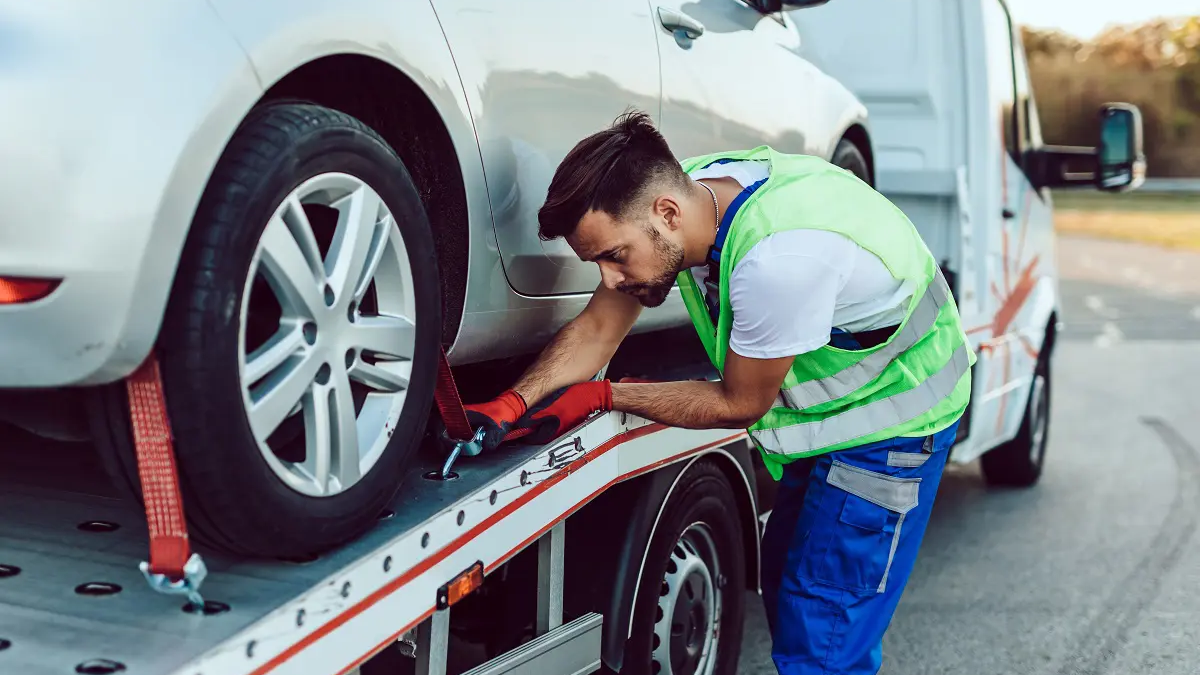
Flatbed towing places the vehicle on a level platform for transportation. Because the vehicle's wheels are generally carried on the bed rather than rolling along the road, this method can be suitable for many damaged, disabled, specialty, and all-wheel-drive vehicles.
Drivers may request flatbed towing when a vehicle has collision damage, needs careful transportation, or cannot safely be towed with its wheels on the ground. The correct loading procedure still depends on the vehicle's condition and the manufacturer's requirements.
Flatbed service may cost more than some basic towing options, depending on the provider, distance, equipment, and circumstances. Ask whether it is necessary for your particular vehicle before confirming service.
Wheel-Lift Towing
Wheel-lift towing uses equipment that lifts one end of a vehicle while the other end may roll on its wheels. It can be appropriate for certain vehicles and recovery situations when the towing equipment and vehicle specifications are compatible.
However, wheel-lift towing is not automatically suitable for every car. All-wheel-drive systems, low ground clearance, collision damage, and steering or suspension problems can affect the method selected.
Tell the dispatcher about any relevant mechanical issues or vehicle modifications. The operator should determine the appropriate procedure based on the vehicle and its condition.
Accident Recovery and Difficult Vehicle Situations
A vehicle involved in a collision may have hidden damage even when it appears drivable. Damaged suspension parts, bent wheels, fluid leaks, or compromised steering can make moving the vehicle unsafe.
Vehicle recovery may also be necessary when a car is stuck off the roadway, in soft ground, or in a position that prevents ordinary towing. Such situations may require specialized equipment and careful assessment of the surroundings.
If your vehicle has been in an accident, follow police instructions and any applicable traffic-control requirements. Do not attempt to move a severely damaged vehicle yourself simply to clear the area.
How Much Does Towing or Roadside Assistance Cost in Westerville?
Towing prices vary according to the service required, the vehicle, the distance, and the conditions at the pickup location. There is no single price that accurately represents every roadside emergency in Westerville.
Factors That Affect Towing Prices
Common pricing factors include:
Base or hookup fee: The initial charge for dispatching or connecting the vehicle, depending on the provider's pricing structure.
Distance: The mileage between the pickup point and destination may affect the total.
Vehicle type: Larger, heavier, modified, or specialty vehicles may require different equipment.
Recovery complexity: A vehicle stuck in a ditch or obstructed position may require additional labor or equipment.
Time and circumstances: After-hours arrangements, difficult access, or other service conditions may affect the quote.
Additional services: Winching, storage, or other work may carry separate charges.
Roadside services such as jump-starts, tire changes, lockout assistance, and fuel delivery are often priced differently from towing. Coverage through a motor club, insurance policy, or manufacturer program may also change what you pay out of pocket.
How to Avoid Unexpected Charges
Ask for a clear estimate before authorizing the service. Find out whether the quote includes hookup, mileage, recovery work, and the destination you requested.
If the price depends on conditions the operator cannot assess until arrival, ask which additional charges might apply and how they will be explained before extra work begins. Keep any written estimate, service authorization, and receipt.
It is also worth checking your auto insurance policy or roadside membership before paying privately. Coverage limits, distance restrictions, service-call allowances, and reimbursement requirements differ between plans.
How to Prepare for Roadside Emergencies in Ohio
Preparation cannot prevent every breakdown, but it can reduce confusion when something goes wrong. A few practical habits make it easier to handle roadside problems safely.
Keep Up With Routine Vehicle Maintenance
Follow the maintenance schedule recommended in your owner's manual. Pay attention to battery condition, tire pressure, tread wear, engine temperature, fluid levels, and dashboard warnings.
Have unusual noises, repeated starting problems, or unexplained warning lights checked promptly. Addressing a developing issue before a long drive may reduce the chance of being stranded far from a safe stopping place.
Keep Essential Items in Your Vehicle
A basic roadside kit can help you manage the waiting period and communicate with a service provider. Consider keeping:
A phone charger or power bank.
A flashlight with working batteries.
A reflective vest for use when appropriate.
Drinking water and weather-appropriate clothing.
A first-aid kit.
A warning triangle or other permitted visibility equipment, used only when it can be placed safely.
Your insurance information and roadside assistance contact details.
Choose equipment that fits your vehicle and circumstances. Never place warning devices in traffic or walk into a dangerous roadway to retrieve an item.
Understand Ohio Road and Weather Conditions
Ohio weather can change driving conditions quickly. Rain, snow, ice, and freezing temperatures may affect traction, visibility, battery performance, and stopping distances.
Increase following distance when roads are slippery, reduce speed for conditions, and avoid sudden braking or steering. Before traveling in severe weather, check forecasts and road advisories and consider postponing a trip if conditions make it unsafe.
If you become stranded in cold weather, stay alert to the risk of carbon monoxide if the engine must run. Never operate an engine in an enclosed space, and ensure the exhaust pipe is clear of snow before running the vehicle outdoors. Follow emergency guidance if conditions become dangerous.
What to Know Before Calling for Towing Assistance
A few simple checks can make a service request more efficient and help prevent misunderstandings.
Verify the Provider and the Quote
Choose a provider that can explain the service, identify the expected charges, and confirm the destination. Be cautious about vague pricing or pressure to authorize work you do not understand.
Ask whether the provider can handle your specific vehicle and situation. If your car has all-wheel drive, significant collision damage, unusual dimensions, or special transport requirements, mention those details at the beginning of the call.
Check Your Roadside Coverage
Some auto insurance policies, vehicle warranties, and motor club memberships include roadside assistance. Before requesting a separate service, check whether your plan covers the problem and whether you must use an approved provider.
If the vehicle is in an unsafe location, however, do not delay emergency action while trying to compare benefits. Protect yourself first and sort out coverage when it is safe to do so.
Prepare for the Tow
If the vehicle is safely accessible, remove essential personal belongings and have the keys ready. Tell the operator about electronic parking brakes, steering problems, low ground clearance, or other issues that could affect loading.
Do not attempt to load the vehicle yourself or stand near moving towing equipment. Follow the operator's directions and confirm where the vehicle will be delivered before transportation begins.
Conclusion
Towing and roadside assistance in Westerville help drivers respond to vehicle problems that cannot always be solved independently. The right service depends on the cause of the breakdown, the vehicle's condition, and whether the situation can be handled safely at the roadside.
When a problem occurs, move away from traffic when possible, assess immediate hazards, describe the symptoms accurately, and confirm the service and estimated cost before work begins. A jump-start or tire change may be enough for a minor problem, while collision damage, overheating, or serious mechanical trouble may require towing.
Routine maintenance, a basic emergency kit, and a clear understanding of your roadside coverage can also make an unexpected stop easier to manage. For drivers in Westerville and the surrounding Columbus area, preparation and informed decisions are practical ways to protect both personal safety and the vehicle.
Frequently Asked Questions
1. What is the difference between towing and roadside assistance?
Roadside assistance addresses certain problems at the vehicle's location, such as a dead battery, flat tire, lockout, or fuel shortage. Towing transports a vehicle when it cannot be repaired safely at the roadside or should not continue driving.
2. When should I call a tow truck instead of trying to drive home?
Request towing if your vehicle has serious collision damage, persistent overheating, unsafe steering or braking, a damaged wheel, or another fault that makes driving unreliable. If you are uncertain whether the vehicle is safe, stop in a safe location and seek professional guidance.
3. Can roadside assistance help with a dead car battery?
Yes, many roadside providers offer jump-start services for discharged batteries. If the battery is damaged, the vehicle repeatedly fails to start, or warning lights indicate a charging-system problem, additional diagnosis or towing may be necessary.
4. Is flatbed towing better for every vehicle?
No. Flatbed towing is appropriate for many damaged, specialty, and all-wheel-drive vehicles, but the correct method depends on the vehicle manufacturer's instructions, its mechanical condition, and the equipment available. A qualified operator can determine the suitable approach.
5. How much does a tow truck cost in Westerville, Ohio?
The cost depends on the pickup location, towing distance, vehicle type, equipment, and whether recovery work or additional services are required. Request an itemized estimate and confirm potential extra charges before authorizing service.
6. What should I do if my car breaks down on a busy road?
Turn on your hazard lights and move to a safe location if the vehicle can be controlled. Avoid standing in traffic or attempting roadside repairs in an exposed area. Contact emergency services if the situation presents an immediate danger.
7. Can a tow truck transport a vehicle after an accident?
Yes, accident recovery and vehicle recovery services can transport vehicles damaged in collisions. The appropriate equipment depends on the damage and the vehicle's condition. Follow police instructions, document the incident when safe, and communicate any visible damage to the towing provider.
8. Does roadside assistance cover tire changes and fuel delivery?
Some roadside plans and service providers offer tire changes and emergency fuel delivery, but availability and fees vary. Check your coverage and explain the problem when requesting help so the provider can confirm what service is available.
9. Should I use roadside assistance through my insurance or contact a towing company directly?
Compare your insurance or membership benefits, including provider restrictions, distance limits, service fees, and reimbursement rules. If the vehicle is in a dangerous location, prioritize safety and arrange urgent assistance rather than delaying necessary action to compare coverage.
10. What information should I provide when requesting roadside assistance?
Give the dispatcher your exact location, vehicle make and model, a description of the problem, and whether the vehicle can move safely. Mention collision damage, blocked wheels, unusual vehicle dimensions, or other conditions that could affect the service or towing equipment.
