What Happens During a Professional Battery Jump Start?
Introduction
A dead car battery can turn an ordinary trip into an unexpected roadside problem. You may hear a clicking sound when you turn the key, see the dashboard lights come on but the engine fail to crank, or get no response at all. In many cases, the battery has simply lost enough charge to start the engine.
A professional battery jump start is more than connecting another battery and hoping the vehicle starts. A trained roadside technician first considers the vehicle's condition, battery terminals, electrical system, and surrounding safety risks. The goal is to restore enough electrical power for the engine to start while avoiding damage to the vehicle.
Understanding what happens during a professional jump start can help you know what to expect when you call for roadside assistance. It can also help you recognize situations where a jump start may not be the right solution, such as a damaged battery, a serious electrical problem, or an issue with the charging system.
What Is a Professional Battery Jump Start?
A professional battery jump start is a roadside assistance service used to provide temporary electrical power to a vehicle with a battery that does not have enough charge to start the engine.
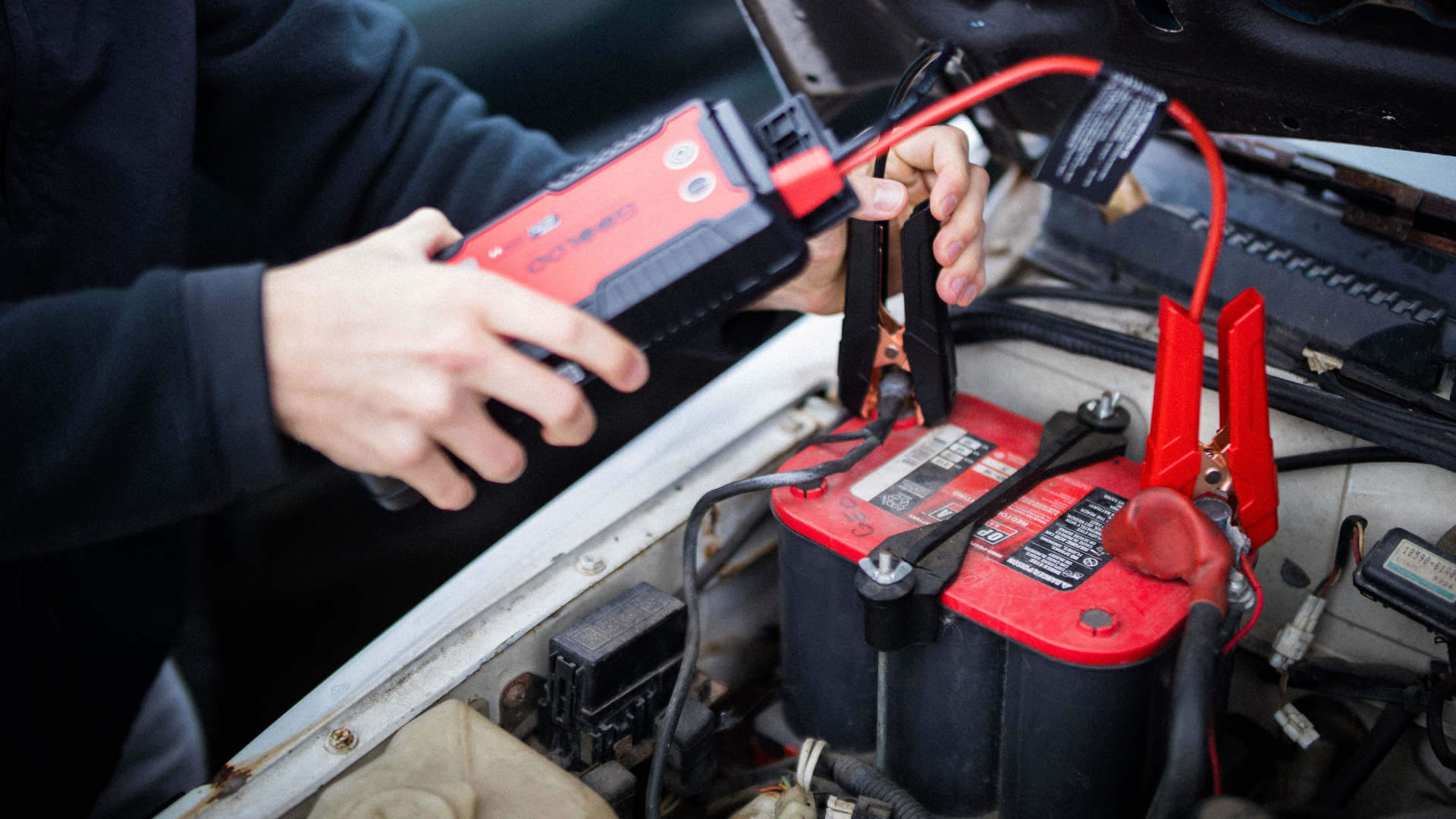
The technician uses an appropriate power source, such as a jump-start unit or another properly equipped vehicle, and connects it to the disabled vehicle using jumper cables or suitable electrical equipment.
The basic purpose is simple: provide enough power for the starter motor to crank the engine.
A successful jump start does not necessarily mean the battery is healthy. As noted in guides on common causes of dead batteries and how to prevent them, a battery can start a vehicle after receiving external power and still have an underlying problem that needs attention.
Why a Car Battery May Go Dead
Several situations can leave a vehicle without enough battery power to start. Common examples include:
Leaving headlights or interior lights on
Leaving an accessory plugged in or operating for an extended period
A battery that has reached the end of its service life
Extreme temperatures affecting battery performance
Corroded or loose battery connections
An alternator or charging-system problem
A vehicle that has remained unused for an extended period
Electrical components continuing to draw power after the vehicle is turned off
The symptoms can look similar even when the underlying causes are different. That is one reason professional roadside assistance can be useful.
What Happens Before the Jump Start?
A professional battery jump start begins with an assessment rather than immediately attaching cables.
The technician needs to determine whether the vehicle appears suitable for a jump start and identify obvious safety concerns. This matters because not every no-start situation is caused by a weak battery.
The Technician Assesses the Vehicle
The technician may ask what happened before the vehicle stopped starting. For example, you might mention that the headlights were accidentally left on, the vehicle had been sitting for several days, or the engine suddenly stopped while driving.
The technician can also inspect the vehicle for visible signs of a battery or connection problem.
This initial information helps distinguish a likely discharged battery from other possible causes of a no-start condition.
The Battery and Connections Are Inspected
The technician may examine the battery terminals, cables, and visible connections for obvious problems such as corrosion, looseness, damage, or unusual conditions.
A severely damaged battery or cable connection may require a different response. Trying to force a jump start through a damaged electrical connection can create unnecessary risk.
The Vehicle's Safety Conditions Are Considered
Location matters during roadside assistance. A vehicle stopped near moving traffic, on a narrow shoulder, or in an unsafe position requires extra caution.
The technician needs enough room to work around the vehicle while reducing exposure to passing traffic. Hazard lights, warning devices, and appropriate positioning may be used when conditions allow. For more guidance, review these safety tips for drivers experiencing a breakdown on busy roads.
How Does a Professional Battery Jump Start Work?
Once the vehicle and battery appear suitable, the technician prepares the equipment and establishes a proper connection.
The exact procedure can vary depending on the vehicle, battery location, manufacturer's instructions, and equipment being used.
Step 1: Prepare the Vehicle
The vehicle is placed in a safe condition for the jump-start procedure. Electrical accessories are generally turned off so the available electrical power can be directed toward starting the engine.
The technician also identifies the correct battery terminals or designated jump points. Some newer vehicles have battery terminals or jump points located away from the battery itself.
Step 2: Inspect the Jump-Start Connection Points
The technician confirms the positive and negative connection points before attaching equipment.
This is a critical step because connecting equipment incorrectly can damage electrical components or create a dangerous electrical event.
Modern vehicles can contain sensitive electronic systems, so technicians should follow appropriate vehicle and equipment procedures rather than treating every vehicle like an older car.
Step 3: Connect the Jump-Start Equipment
The appropriate clamps or connectors are attached to the designated points.
The technician ensures the connections are secure and positioned correctly. Good contact is necessary for electrical current to pass effectively during the starting attempt.
The equipment may be a portable jump starter or another suitable power source. Professional roadside providers commonly carry equipment designed for roadside starting assistance.
Step 4: Attempt to Start the Vehicle
After the equipment is connected correctly, the technician attempts to start the vehicle.
If the battery was simply discharged and the rest of the starting system is functioning, the engine may crank and start.
If the engine does not start, the technician should not assume that repeatedly attempting to crank it will solve the problem. Additional assessment may be necessary.
Step 5: Disconnect the Equipment Safely
Once the vehicle starts, the jump-start equipment is removed using the appropriate sequence and procedure.
The technician checks that the vehicle remains running and that there are no immediate signs of an obvious problem.
A successful start is useful, but it is not automatically proof that the battery or charging system is functioning normally.
Why Professional Jump Starts Are Safer Than Guessing
A jump start can look straightforward, but modern vehicles have increasingly complex electrical systems. Incorrect connections, damaged cables, or unsuitable equipment can create problems that are more expensive than the original dead battery.
Professional roadside assistance reduces the need for a driver to experiment with unfamiliar equipment beside traffic.
Correct Connection Matters
Positive and negative terminals are not interchangeable. Incorrect connections can cause sparks, electrical damage, or other hazards.
A professional technician is trained to identify the appropriate connection points and use suitable equipment for the vehicle.
Battery Condition Matters
A battery that is swollen, cracked, leaking, severely damaged, or otherwise unsafe should not simply be treated as a normal discharged battery.
Visible battery damage can indicate that the problem requires a different solution.
Vehicle Type Matters
Cars, trucks, SUVs, motorcycles, hybrids, and electric vehicles can have different electrical and starting arrangements.
A roadside technician needs to consider the specific vehicle rather than assuming that the same jump-start procedure applies to every vehicle.
What If the Vehicle Starts but Dies Again?
One of the most useful things to understand about a jump start is that it may only address the immediate symptom.
If the vehicle starts and then has trouble starting again later, the battery may not be holding a charge. Another possibility is a problem with the alternator or charging system.
A Weak Battery
A battery can become too weak to start the vehicle after being discharged, especially if it is older or has been repeatedly drained.
The jump start provides temporary assistance, but the battery may still need testing or replacement.
An Alternator or Charging Problem
The alternator helps recharge the battery while the engine is running and supplies electrical power to the vehicle's systems.
If the charging system is not working properly, the battery may lose its charge again even after a successful jump start.
This is why a recurring dead battery should not automatically be treated as a simple jump-start problem.
A Parasitic Electrical Drain
Sometimes an electrical component continues drawing power when the vehicle is supposed to be turned off.
If that happens repeatedly, a battery may become discharged despite being relatively new. Diagnosing this type of problem usually requires more than roadside starting assistance.
What Should You Do After a Successful Jump Start?
Once the engine starts, avoid immediately assuming the problem has disappeared.
If the technician advises further inspection, battery testing, or service, it is worth taking that recommendation seriously.
A driver should also pay attention to warning lights, unusual electrical behavior, difficulty restarting the vehicle, or other symptoms that appear after the jump start.
Signs You May Need More Than a Jump Start
Consider further vehicle service if:
The vehicle repeatedly needs jump starts
The engine starts but quickly stalls
The battery warning light remains illuminated
Electrical components behave unusually
The battery has visible damage
The vehicle will not restart after being turned off
The starter continues clicking despite a jump attempt
The vehicle has experienced another unexplained electrical failure
A jump start is designed to help get a disabled vehicle running. It is not a substitute for diagnosing a recurring mechanical or electrical problem.
Common Misconceptions About Battery Jump Starts
A Jump Start Fixes a Dead Battery Permanently
Not necessarily. A jump start provides enough external power to help start the engine. It does not repair an aging or damaged battery.
Every No-Start Problem Is a Battery Problem
A vehicle may fail to start because of the starter, alternator, ignition system, fuel system, electrical connections, or another mechanical issue.
Battery symptoms are common, but they are not the only possible explanation.
Driving After a Jump Start Always Recharges the Battery
Driving may allow the vehicle's charging system to replenish some battery charge, but this does not guarantee that a weak battery will recover or that an underlying charging problem has been resolved.
You Should Keep Trying If the Engine Will Not Start
Repeated starting attempts may not solve the problem and can create additional strain on the vehicle's starting system.
If a properly performed jump start does not work, further diagnosis may be needed.
When Should You Call Roadside Assistance?
Calling for professional roadside assistance makes sense when you are dealing with a dead battery and do not have the equipment, experience, or safe conditions needed to perform a jump start yourself.
It is particularly useful when the vehicle is stopped in an inconvenient or potentially dangerous location.
A professional roadside technician can assess the situation, attempt a safe battery jump start when appropriate, and help determine whether towing or additional vehicle service may be necessary.
What Information Should You Give the Technician?
When requesting roadside assistance, provide useful details such as:
Your exact location or a nearby landmark.
The vehicle's make, model, and approximate year.
What happens when you try to start it.
Whether the dashboard lights come on.
Whether you hear clicking or other sounds.
Whether you know why the battery may have discharged.
Whether the vehicle is blocking traffic or located in an unsafe position.
Clear information can help the roadside provider understand the situation before arriving.
How to Prevent Future Dead Battery Problems
No battery lasts forever, but simple habits can avoidable battery problems.
Turn off headlights, interior lights, and accessories before leaving the vehicle. If a car will remain unused for a long period, follow the manufacturer's recommendations for storage and battery maintenance.
Pay attention to warning signs such as slow engine cranking, dimming lights, repeated jump starts, or electrical problems.
If the battery is repeatedly losing power, have the battery and charging system inspected instead of relying on another jump start every time.
Conclusion
A professional battery jump start is a roadside procedure designed to restore enough electrical power for a vehicle to start. The process typically involves assessing the vehicle, checking the battery and connections, identifying the correct connection points, safely applying external power, starting the engine, and removing the equipment correctly.
The biggest takeaway is that a successful jump start does not always identify or solve the underlying problem. A weak battery, charging-system issue, damaged connection, or electrical drain can cause the same vehicle to become stranded again.
When a vehicle will not start, paying attention to the symptoms and seeking appropriate roadside assistance can help you avoid unnecessary risk. If a jump start does not work or the vehicle continues experiencing battery problems, towing or professional mechanical diagnosis may be the more appropriate next step.
Frequently Asked Questions
1. How does a professional battery jump start work?
A technician provides temporary electrical power to a vehicle using appropriate jump-start equipment. After checking the vehicle and connection points, the technician connects the equipment correctly, attempts to start the engine, and safely disconnects the equipment once the vehicle starts.
2. How long does a battery jump start take?
The actual starting procedure can be relatively quick when the battery is simply discharged and the vehicle is otherwise functioning normally. Total roadside assistance time depends on the vehicle, location, safety conditions, and whether additional problems are discovered.
3. Can a jump start damage a car?
A properly performed jump start is generally intended to safely provide temporary starting power. Problems can occur if equipment is connected incorrectly or used improperly, which is one reason following the vehicle manufacturer's procedures and using suitable equipment matters.
4. Why won't my car start even after a jump start?
A vehicle may fail to start after a jump because the battery is damaged, the connections are faulty, or another component such as the starter or charging system has a problem. If the jump does not work, further diagnosis or towing may be necessary.
5. Does a jump start mean I need a new battery?
Not automatically. A battery may simply have been discharged because lights were left on or the vehicle was unused. However, repeated battery failures, poor starting performance, or an aging or damaged battery can indicate that testing or replacement is needed.
6. Can roadside assistance jump-start a car in a parking lot?
Yes, battery jump-start assistance can often be performed in parking lots, driveways, and other accessible locations. The technician still needs enough space to safely reach the vehicle and work around it.
7. What should I do if my car battery dies on the side of the road?
Move the vehicle to a safe location if possible, turn on hazard lights, stay aware of surrounding traffic, and request roadside assistance. Avoid standing in an unsafe area around the vehicle while waiting for help.
8. Can a jump start fix a car that keeps losing battery power?
A jump start can get the vehicle running temporarily, but it does not necessarily fix repeated battery discharge. If the problem continues, the battery, alternator, charging system, or another electrical component may need inspection.
9. How much does roadside battery jump-start assistance cost in Ohio?
The price can vary based on the provider, location, time, vehicle, and circumstances of the service. Drivers should ask about the expected service charge and any applicable additional costs before authorizing roadside assistance.
10. When should I choose towing instead of a jump start?
Towing may be more appropriate when the vehicle cannot be safely jump-started, the battery is visibly damaged, a jump attempt does not work, or another mechanical or electrical problem prevents the vehicle from operating safely.